
This post contains affiliate links. If you buy through them, we may earn a commission at no extra cost to you.
Short answer: the safest way to cook during a power outage is a propane or butane stove used outdoors or, for butane units rated for it, in a well-ventilated kitchen with a window open. A gas range with electronic ignition still works if you light the burners with a match (not the oven). A microwave draws 1,000 to 1,500 watts and is the most efficient electric option on a generator or power station; a 2kWh battery runs it for about 60 minutes of total cooking. Never use a charcoal grill, a camp stove designed for outdoor use, or a propane patio burner inside the house, the garage, or a screened porch. Carbon monoxide from indoor cooking kills more people in outages than the cold does.
Cooking Options Ranked by Safety and Practicality
| Method | Where | Fuel or Power | Notes |
|---|---|---|---|
| Gas range, burners lit with a match | Kitchen | Natural gas or propane (utility) | Works in most outages; the oven usually does not (electronic gas valve) |
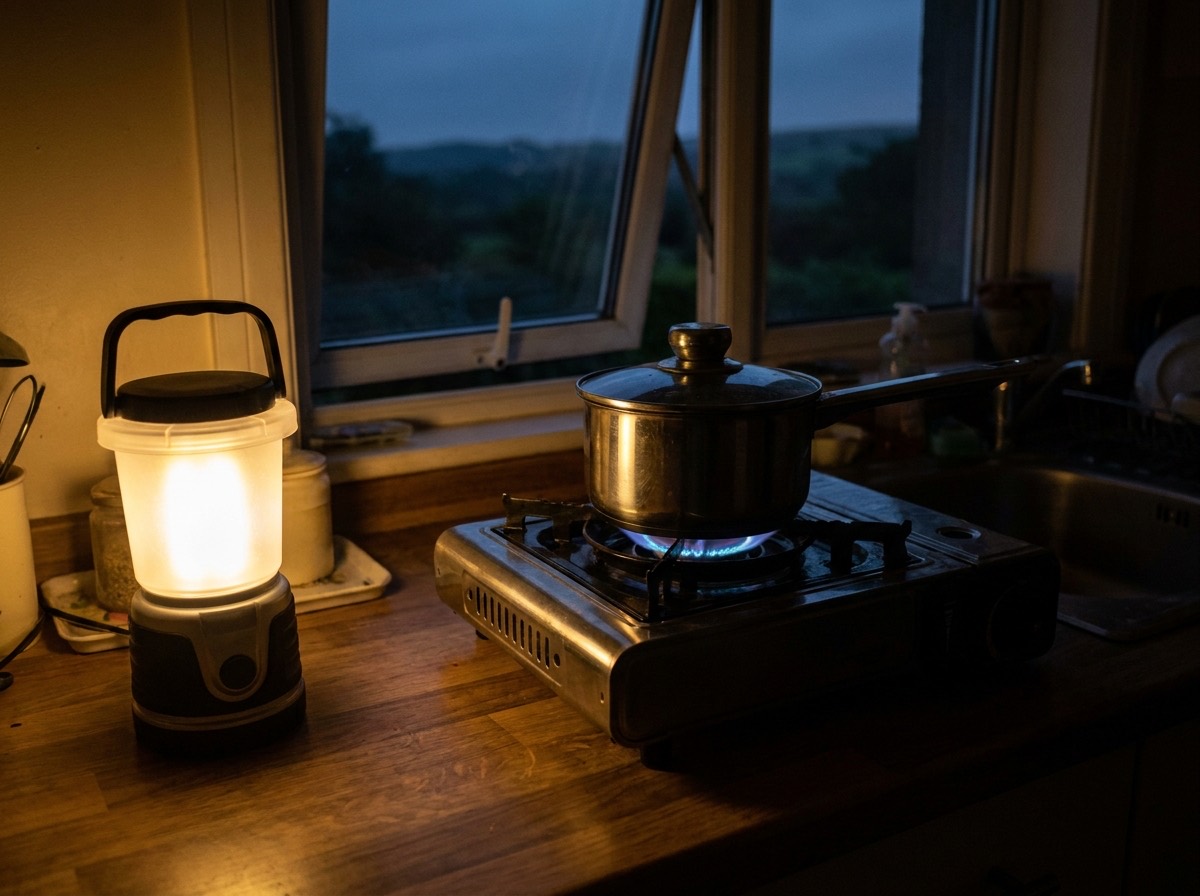
| Butane countertop stove (indoor-rated) | Kitchen, window open | 8 oz butane canisters, 1-2 hours each | The best indoor emergency stove; check the label for indoor use |
| Propane camp stove | Outdoors only | 1 lb cylinders or 20 lb tank with adapter | Fast, hot; never inside or in the garage |
| Outdoor gas grill with side burner | Outdoors only | 20 lb propane tank | Many homes already own one |
| Microwave on generator or power station | Kitchen | 1,000-1,500W for minutes at a time | Most efficient electric cooking per watt-hour |
| Electric kettle or induction hot plate on generator | Kitchen | 1,200-1,800W | Works, but heavy draw; fine on a 3,500W generator |
| Charcoal grill | Outdoors only, 10+ feet from the house | Charcoal | Never indoors, never in a garage, never on a covered porch |
| Wood stove or fireplace | Indoors, existing installation | Wood | Cast iron pots on a wood stove work well |
| Solar oven | Outdoors | Sun | Slow; useful for a multi-day summer outage |
Option 1: Your Gas Range Still Works (Mostly)
If your home has a natural gas or propane range, the burners work without electricity. The electronic igniter will not spark, so hold a lit match or a long lighter to the burner while turning the knob to light. Do not leave the gas on while fumbling for a match. The oven is a different story: most gas ovens since the 1990s use an electric glow-bar igniter and an electronic safety valve, so the oven will not light without power. Stovetop only. A cast iron skillet and a large pot cover most meals.
Option 2: A Butane Stove Rated for Indoor Use
A single-burner butane stove is the emergency cooking tool most households should own. Restaurants use them tableside for a reason: they are safe indoors when the label says so, they produce little carbon monoxide compared to propane camp stoves, and an 8-ounce canister delivers one to two hours of cooking. Rules: use it on a hard surface with a window cracked, keep a CO alarm in the kitchen, never use a pan wider than the stove’s rated size (it reflects heat onto the canister), and store canisters somewhere cool. Buy a dozen canisters before storm season; they keep for years.
Check the current price of portable butane stoves on Amazon
Check the current price of 8 oz butane canisters, 12-pack, on Amazon
Option 3: Propane Stove or Grill, Outdoors
A two-burner propane camp stove is faster and hotter than butane and runs on the same 1-pound cylinders or, with a $15 adapter hose, a 20-pound grill tank. It belongs outdoors, on a table, away from the house, the same way a grill does. In a hurricane or ice storm, a covered patio with open sides is acceptable; a screened porch or a garage with the door open is not. Propane camp stoves produce far more carbon monoxide than butane units and are not rated for indoor use, no matter how well the kitchen seems ventilated. If you already own a gas grill with a side burner, you already have this option.
Check the current price of two-burner propane camp stoves on Amazon
Option 4: Cooking on a Generator or Power Station
Cooking is a heavy electric load, so choose the appliance carefully.
| Appliance | Draw | Typical Use | Energy per Use | Uses per 2kWh Battery |
|---|---|---|---|---|
| Microwave, 1,000W | 1,200-1,500W (input) | 4 minutes | ~90Wh | ~19 |
| Electric kettle, 1,500W | 1,500W | 4 minutes | 100Wh | ~17 |
| Induction hot plate, medium | 800-1,200W | 15 minutes | 200-300Wh | ~6-8 |
| Coffee maker, drip | 900-1,200W | 8 minutes | ~140Wh | ~12 |
| Slow cooker, low | 150-200W | 6 hours | ~1,000Wh | ~1.7 |
| Toaster oven | 1,200-1,500W | 15 minutes | ~330Wh | ~5 |
| Air fryer | 1,400-1,700W | 15 minutes | ~400Wh | ~4 |
| Electric range burner | 1,200-2,500W | 20 minutes | ~500-800Wh | ~2-3 |
The microwave and the kettle win because they are on for minutes, not hours. A 2kWh power station can reheat meals for a family for two or three days on the microwave alone and still run the fridge. The slow cooker looks efficient by the hour but runs for six of them; skip it on a battery. On a generator, any of these works as long as the generator’s continuous rating covers the appliance plus whatever else is running; a 3,500-watt unit handles a microwave and the refrigerator together. The appliance wattage guide lists everything else in the kitchen.
Make sure the generator is outside, 20 feet from the house, with the rules in generator carbon monoxide safety; a power station can sit on the counter. Our guide to the best portable power stations for home backup lists units with enough output for a microwave.
What Never Goes Indoors
- Charcoal grills or hibachis. Charcoal produces enormous amounts of CO; people die every winter from a grill “just in the garage.”
- Propane camp stoves and patio heaters.
- Gas generators, obviously, and also “just for a minute.”
- Kerosene heaters or stoves not rated for indoor use.
- Sterno or chafing fuel in a closed room for extended periods.
A battery-powered CO alarm in the kitchen is the backstop for every one of these. If it sounds, everyone goes outside.
Food That Needs No Cooking
Three days of no-cook food per person removes most of the pressure: canned beans, tuna, and chicken; peanut butter; crackers; dried fruit and nuts; shelf-stable milk; granola bars; and a manual can opener. Ready-to-feed formula for infants. Keep a case of bottled water alongside. This is the food that gets you through the first 24 hours while you set up the stove and sort out the fridge, which has its own rules; see how to keep food safe during a power outage.
Water for Cooking and Cleaning
If you are on a well, the pump stops with the power. Store one gallon per person per day, plus extra for cooking and washing up. Boiling water on a butane stove takes 5 to 8 minutes per quart, which is fine for pasta and coffee but slow for a big pot; heat only what you need. Paper plates and a bucket of wash water keep the sink from becoming a problem. If a boil-water advisory is issued during the outage (common after floods and hurricanes), a full rolling boil for one minute makes tap water safe.
Pre-Storm Kitchen Checklist
- Butane stove and 6 to 12 canisters, or a propane stove with 4 to 8 one-pound cylinders
- Long lighter and a box of matches in a zip bag
- Manual can opener
- Three days of no-cook food per person
- Water: one gallon per person per day, plus cooking water
- CO alarm in the kitchen, batteries fresh
- Cast iron skillet and a large pot with a lid
- Paper plates, cups, and a trash bag plan
- Power station charged if the microwave is part of the plan
The full household list is in our power outage checklist; for a storm that could keep the power off a week or more, read preparing for extended power outages.
Frequently Asked Questions
Can I use a camp stove indoors during a power outage?
Only a butane stove specifically rated for indoor use, with a window cracked and a CO alarm present. Propane camp stoves and any grill belong outdoors.
Does a gas stove work without electricity?
The burners do, lit with a match. The oven usually does not, because its igniter and safety valve need power.
Can a power station run a microwave?
Yes, if its continuous output is 1,500 watts or more. A 2kWh unit runs a 1,000-watt microwave for roughly an hour of total cooking time.
What is the safest way to cook without power?
A gas range burner lit with a match, or an indoor-rated butane stove with ventilation. Outdoors, a propane stove or grill.
How long does a butane canister last?
An 8-ounce canister runs a single burner for about 1 to 2 hours depending on the flame setting, enough for 4 to 8 simple meals.