
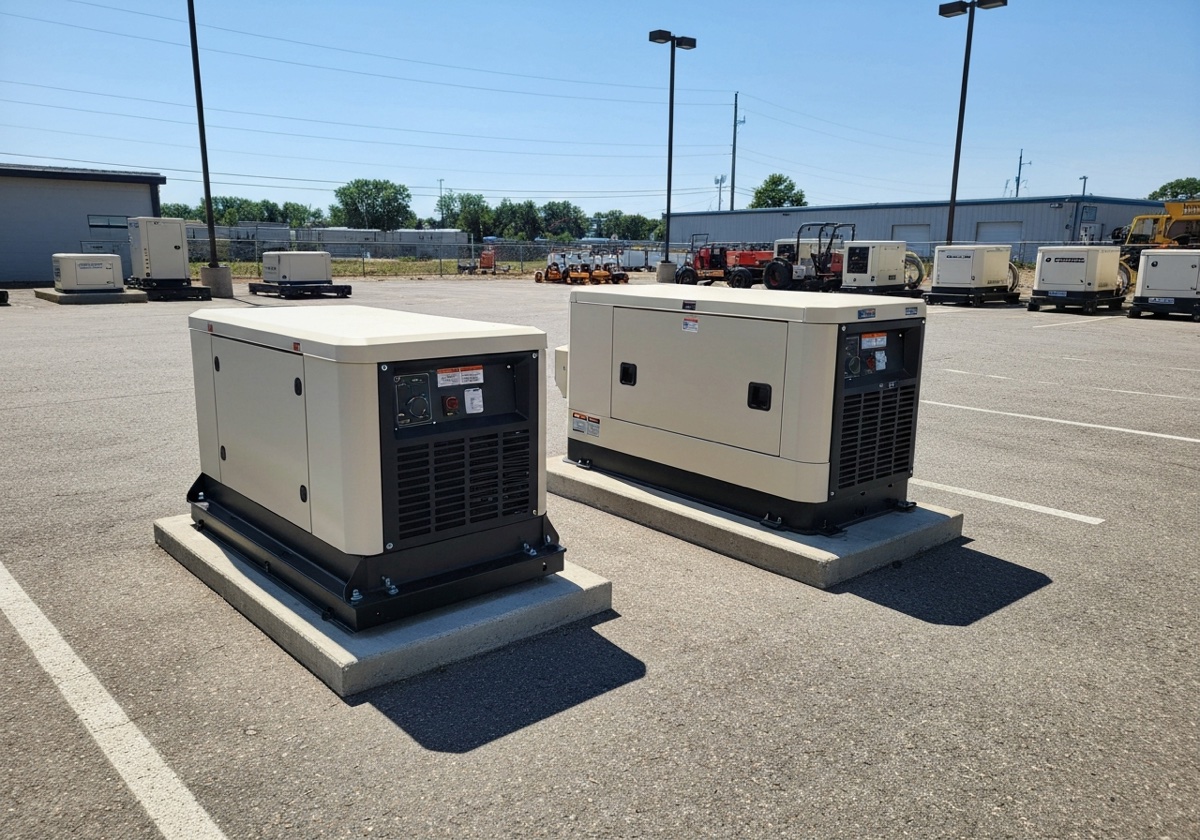
Ask three neighbors with standby generators which brand you should buy and you will probably get three confident, contradictory answers. Generac owners point to the price and the dealer on every corner. Kohler owners talk about build quality like they bought a luxury appliance. And the Briggs & Stratton owner quietly mentions paying a couple thousand less than both of them.
Here is the uncomfortable truth this guide keeps coming back to: with home standby generators, the machine is only half the purchase. The other half is the local dealer who installs it, services it, and answers the phone when it will not start during an ice storm. Keep that in mind through every round below, because it changes which brand is “best” from one zip code to the next.
Quick Answer: Generac vs Kohler vs Briggs & Stratton
- Generac is the best choice for most homeowners. It holds roughly 70% of the home standby market, has by far the largest dealer and parts network, offers the polished Mobile Link monitoring app, and typically comes in $1,000 to $3,000 cheaper installed than a comparable Kohler.
- Kohler is the premium pick. Faster transfer times (around 10 seconds versus roughly 15 for Generac), commercial-grade engineering heritage, corrosion-resistant composite or powder-coated enclosures, and longer warranties on some lines. You pay noticeably more for it.
- Briggs & Stratton is the value pick. Solid machines with competitive warranties at the lowest installed price of the three, but a much smaller dealer network, which is a real risk in some regions.
- The deciding factor: whichever brand has the strongest, most responsive dealer within 30 to 45 minutes of your house. A well-supported Briggs beats a poorly supported Kohler every time.
Round 1: Price Installed
Sticker prices on the generator itself only tell part of the story. A 20kW class unit runs roughly $4,500 to $6,500 at retail depending on brand, but installation typically adds $4,000 to $8,000 on top for the concrete pad, transfer switch, gas line work, electrical connections, and permits. Total installed cost is the number that matters.
- Generac: roughly $9,000 to $13,000 installed for a 22kW-24kW air-cooled unit. Generac’s scale keeps unit prices down, and heavy dealer competition in most markets keeps installation quotes honest.
- Kohler: roughly $11,000 to $16,000 installed for a comparable 20kW-26kW unit. Expect to pay a premium of 15% to 30% over Generac for similar capacity.
- Briggs & Stratton: roughly $8,500 to $12,000 installed. Usually the cheapest of the three, sometimes by a wide margin when a local dealer is hungry for business.
Winner: Briggs & Stratton on pure price, Generac on price-to-support ratio. If budget is the constraint, Briggs wins the quote comparison more often than not. But Generac’s price advantage over Kohler combined with its service network makes it the strongest overall value for most buyers. If all three brands land above your budget, our guide to home backup power for every budget covers cheaper alternatives.
Round 2: Reliability Reputation and Owner Feedback
All three brands build machines designed to sit idle for months and then run for days straight, and all three mostly succeed at it. The differences show up in the patterns of owner feedback rather than in dramatic failure rates.
Generac sells so many more units than everyone else that it also generates more complaints in absolute terms, which skews casual research. Read carefully and the pattern is clear: most Generac problems trace back to skipped maintenance or a sloppy installation, not the machine itself. The Evolution controller occasionally throws nuisance error codes, and some owners report needing a valve adjustment or oil-related service call in the first few years. When maintained on schedule, these units routinely run 15 to 20 years.
Kohler earns the most consistently positive owner feedback of the three. The company has built commercial and industrial generators since the 1920s, and its residential units inherit that engineering. Owners describe them as boringly dependable, which is exactly what you want. Complaints, when they appear, usually involve parts taking longer to arrive because the dealer network is thinner.
Briggs & Stratton sits in the middle. The machines are fundamentally sound, and the company has been building engines since 1908, so this is not an unknown quantity. The feedback pattern to watch is not about the hardware but about service delays: fewer certified technicians means longer waits when something does go wrong.
Winner: Kohler by a nose on the machine itself. But the gap is smaller than Kohler’s price premium suggests, and a properly maintained unit from any of the three should serve you well over a decade.
Round 3: Warranty Terms
- Generac: 5-year limited warranty on air-cooled home standby units, typically structured as 5 years on parts with labor coverage tapering in the later years. Extended warranties to 7 or 10 years are available for purchase.
- Kohler: 5-year or 2,000-hour warranty on most residential lines, and some models carry stronger corrosion and enclosure coverage. Kohler’s warranties are often described as more comprehensive in the details, with fewer coverage step-downs.
- Briggs & Stratton: historically aggressive here, with some standby lines carrying warranties up to 6 years, among the longest standard terms in the category. It is part of how the brand competes against the two giants.
Winner: a split decision. Briggs & Stratton wins on headline length, Kohler wins on depth of coverage. One practical note that outranks all of it: warranty service still runs through the dealer network, so a great warranty with no nearby certified servicer is a coupon you cannot redeem.
Round 4: Dealer and Service Network (The Decisive Round)
This is the round that should carry the most weight in your decision, and it is not close.
Generac has thousands of dealers and certified service providers across the United States. In most metro areas you can get three competing Generac installation quotes in a week, and when your unit throws a fault code in year six, there is a technician who can be on site within days with the part already on the truck. Parts availability is the best in the industry because the installed base is so enormous.
Kohler has a respectable network, strongest in the Midwest, Northeast, and hurricane-prone coastal markets, but it is a fraction of Generac’s size. In well-covered areas Kohler service is excellent. In thinly covered areas, you may wait a week or more for a technician and longer for parts.
Briggs & Stratton has the smallest standby dealer network of the three. In some regions coverage is perfectly adequate; in others the nearest certified servicer is over an hour away, which turns every service visit into a scheduling negotiation and adds trip charges.
Here is the argument in one sentence: a standby generator is a 15-to-20-year service relationship, not a one-time purchase, and the brand with the best local dealer effectively becomes the best brand for your address. Before you compare spec sheets, search each manufacturer’s dealer locator for your zip code, then call the two or three closest dealers for each brand and note who answers, who calls back, and who has been in business the longest. That research predicts your ownership experience better than any brochure.
Winner: Generac, decisively, in most of the country.
Round 5: Noise
Air-cooled standby generators in the 20kW class all land in the same general band: roughly 60 to 70 decibels at about 23 feet, comparable to a central air conditioning condenser, though a bit deeper in tone.
- Generac Guardian units run around 66 to 67 dB at full load, with a weekly self-test that can run at reduced RPM (“Quiet-Test”) around 60 dB.
- Kohler units are similar, roughly 62 to 69 dB depending on model, and many owners perceive them as slightly smoother in tone thanks to enclosure design.
- Briggs & Stratton units land in the same range, roughly 64 to 68 dB.
Winner: effectively a tie. Placement matters more than brand here. Keeping the unit away from bedroom windows and off hard reflective surfaces does more for your sleep than choosing one nameplate over another.
Round 6: Smart Features and Monitoring
Generac’s Mobile Link is the most mature remote monitoring platform in the category. It shows status, maintenance reminders, exercise results, and fault alerts on your phone, and it can loop your dealer in automatically so they see a problem before you do. Wi-Fi comes built into current Guardian models.
Kohler’s OnCue Plus covers the same core ground: remote status, notifications, and exercise history. It works well, though the app experience has historically trailed Mobile Link in polish and update cadence.
Briggs & Stratton’s InfoHub provides remote monitoring as well, but the ecosystem is the least developed of the three.
Winner: Generac. If you travel often or manage a second home, Mobile Link plus automatic dealer alerts is a genuinely useful advantage, not a gimmick. Generac and Kohler have also carried this connected approach into home batteries; if stored energy interests you, see our guide to the best Tesla Powerwall alternatives.
Round 7: Enclosure and Build Durability
The enclosure matters more than most buyers realize, because this machine lives outside in rain, snow, and salt air for two decades.
Kohler takes this round. Many of its residential units use corrosion-proof composite enclosures or heavily powder-coated steel, and the brand offers strong options for coastal installations where salt air destroys ordinary steel cabinets. Kohler also transfers load in roughly 10 seconds, faster than the typical Generac at around 15 seconds, which is a small but real refinement (your lights come back before you find the flashlight).
Generac uses galvanneal steel enclosures with a durable powder coat, plus aluminum enclosure options for coastal areas. Perfectly good, but base trims are a step below Kohler’s composite approach in harsh environments.
Briggs & Stratton offers galvanneal steel with rust-resistant coatings, adequate for most inland installations.
Winner: Kohler. If you live within a few miles of salt water, this round alone can justify the premium.
Head to Head: 20kW Class Comparison
| Generac (22kW Guardian class) | Kohler (20kW-26kW class) | Briggs & Stratton (20kW class) | |
|---|---|---|---|
| Typical installed cost | Roughly $9,000-$13,000 | Roughly $11,000-$16,000 | Roughly $8,500-$12,000 |
| Transfer time | Around 15 seconds | Around 10 seconds | Around 10-20 seconds |
| Warranty | 5 years limited | 5 years / 2,000 hours | Up to 6 years on some lines |
| Dealer network | Largest by far | Moderate, region-dependent | Smallest of the three |
| Noise at ~23 ft | Roughly 66-67 dB | Roughly 62-69 dB | Roughly 64-68 dB |
| Monitoring app | Mobile Link (best in class) | OnCue Plus | InfoHub |
| Enclosure | Galvanneal steel, aluminum option | Composite / corrosion-resistant options | Galvanneal steel |
| Best for | Most homeowners | Premium buyers, coastal homes | Budget buyers with a good local dealer |
The Verdicts
Best overall for availability, support, and value: Generac. Roughly seven out of ten home standby generators sold in America are Generacs, and that is not an accident. The machines are good, the price is right, Mobile Link is the best app in the business, and no matter where you live, someone nearby can install it, service it, and stock parts for it. For most homeowners, this is the rational default.
Best premium build: Kohler. If the extra $2,000 to $3,000 does not sting, Kohler rewards you with faster transfer, tougher enclosures, commercial-grade engineering, and the most consistently glowing owner feedback of the three. It is the pick for coastal homes and for buyers who simply want the nicest version of the thing. Just confirm a strong Kohler dealer serves your area before you commit.
Best budget pick: Briggs & Stratton. If quotes come back meaningfully cheaper and there is an established, well-reviewed Briggs dealer within a reasonable drive, this is a legitimate way to save real money on a solid machine with a competitive warranty. If the nearest certified servicer is 90 minutes away, the discount is not worth it. And if no quote feels right, a whole house battery backup is worth a look before you settle.
And the verdict that outranks all three: choose the dealer first, then the brand. Interview installers the way you would interview a contractor for a kitchen remodel. Ask how many units they install per year, whether they offer annual maintenance plans, and what their emergency response looks like during a regional outage when everyone calls at once. The brand on the enclosure matters less than the name on the service van.
Frequently Asked Questions
Is Kohler really better than Generac, or just more expensive?
It is genuinely better in a few specific ways: transfer time around 10 seconds versus roughly 15, more corrosion-resistant enclosures, and slightly stronger owner satisfaction patterns. Whether those improvements are worth a 15% to 30% price premium depends on your budget and location. For a coastal home, often yes. For a typical suburban install with a great Generac dealer nearby, usually no.
Why does Generac have so many complaints online if it is the best seller?
Volume. Generac sells several times more units than its competitors combined, so it accumulates more of everything, including complaints. As a percentage of units sold, its issue rate is in line with the industry, and a large share of reported problems trace to missed maintenance or poor installation rather than factory defects. This is exactly why dealer quality matters so much.
How long do these standby generators actually last?
Air-cooled units from all three brands are generally engineered for roughly 10,000 to 20,000 running hours, which translates to 15 to 25 years of typical standby use with annual maintenance. Skipped oil changes and ignored exercise-cycle faults are what kill them early, not the badge on the front.
Should I wait for a sale or buy in the off-season?
Timing helps more with installation scheduling than with price. After a major hurricane or ice storm, demand spikes, lead times stretch to months, and quotes climb. Buying in a calm season (late winter or early spring in most regions) usually gets you faster installation and more negotiating room with dealers competing for work.
Prices and specifications in this article are approximate, vary by model and region, and change over time. Always confirm current pricing, warranty terms, and local code requirements with certified dealers before purchasing.