
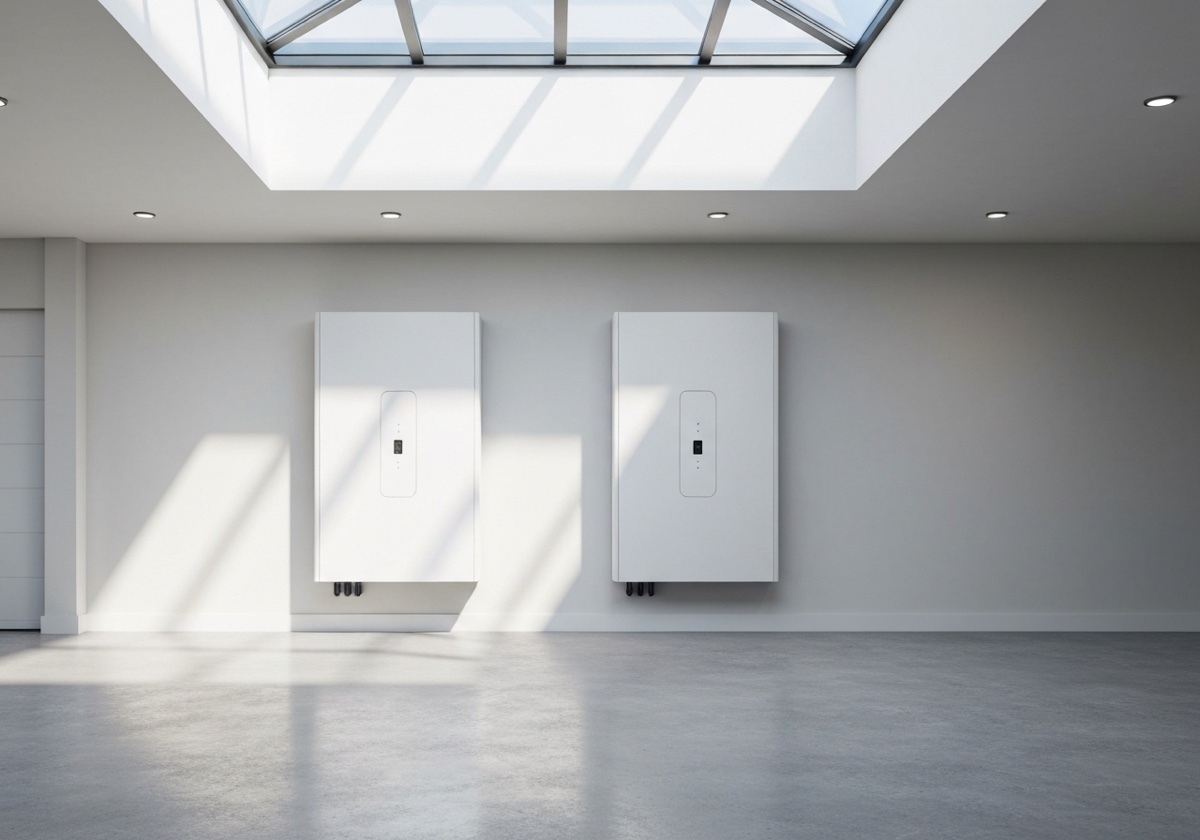
A portable generator keeps the lights on. A whole-house battery backup keeps your life on: the air conditioner in July, the well pump, the Wi-Fi, the garage door, all of it, silently and automatically, before you even notice the grid went down. That is why home batteries have gone from a Tesla-owner curiosity to one of the fastest-growing home upgrades in America.
It is also a five-figure decision, and the marketing does not make it easy. Every brand claims “whole-home backup,” but the specs that decide whether a system can actually start your 4-ton AC are usually buried. This guide breaks down the five systems that lead the market in 2026, what each is genuinely good at, and how to size a setup that backs up the whole house instead of just part of it.
Quick Answer: The Best Whole-House Battery Backup Systems
- Best overall ecosystem: Tesla Powerwall 3. Integrated solar inverter, 11.5kW of continuous output from a single unit, the most mature app, and the largest installer network in the country.
- Best modular and expandable: Enphase IQ Battery 5P. Small 5kWh building blocks let you start with essential loads and grow to whole-home backup one battery at a time, with no single point of failure.
- Best for large homes: FranklinWH aPower 2. Roughly 15kWh per unit and strong surge output make it the fastest path to the 27kWh+ most large homes need.
- Best value: EG4 PowerPro (and similar server-rack style systems). Dramatically lower cost per kWh for homeowners willing to work with an independent installer instead of a big national brand.
- Best modular alternative and cold-climate pick: Anker SOLIX X1. Slim stackable design and heated battery modules rated to operate in temperatures around -4°F.
Whole-Home Backup vs. Essential-Loads Backup: Know Which One You’re Buying
This is the most misunderstood point in home battery shopping, so let’s settle it first.
Essential-loads backup means an electrician moves your critical circuits (refrigerator, some lights, internet, maybe a furnace fan) to a small subpanel, and the battery backs up only that subpanel. It is cheaper and a single battery handles it easily. The trade-off: during an outage, half your house is dead by design.
Whole-home backup means the battery system sits between the meter and your main panel and carries everything, including 240V loads like central air, an electric range, or a well pump. This requires much more from the hardware: higher continuous output, serious surge capacity to start motor loads, and enough stored energy that you do not drain the system in three hours.
A useful rule of thumb: one battery is an essential-loads system. Whole-home backup almost always means two or more, for both output and capacity.
The 5 Best Whole-House Battery Systems in 2026
1. Tesla Powerwall 3: Best Overall Ecosystem
Who it’s for: Homeowners who want the most complete, most refined package with the least friction, especially if solar is part of the plan now or later.
- Capacity: 13.5kWh per unit, expandable to roughly 40.5kWh with expansion packs per Powerwall
- Continuous output: 11.5kW per unit, which is enough to start most 4-ton air conditioners from a single battery
- Inverter: Integrated solar inverter with 20kW of solar input, so no separate string inverter is needed
- Chemistry: LFP (lithium iron phosphate), the safer, longer-lived chemistry now standard across the industry
- Warranty: 10 years
Strengths: The Powerwall 3 solved the original Powerwall’s biggest weakness, output. At 11.5kW continuous with strong motor-starting surge, one unit can genuinely run a whole small-to-medium home. The integrated inverter simplifies solar installs and cuts equipment cost, the app is the best in the business (including automatic pre-charging when severe weather is forecast), and installer availability is unmatched.
Trade-offs: Expansion is Tesla’s way or nothing: the DC expansion packs add capacity but not output, and you are locked into Tesla’s ecosystem and service network. Homes with existing third-party solar inverters may find integration less elegant, and per-unit pricing sits at the premium end, typically around $9,000 to $11,500 installed depending on region and electrical work.
2. Enphase IQ Battery 5P: Best Modular and Expandable
Who it’s for: Homeowners who want to start small and grow, anyone who already has (or plans) Enphase microinverter solar, and people who value redundancy over raw size.
- Capacity: 5kWh per unit, stackable to 40kWh and beyond
- Continuous output: Roughly 3.84kW per unit, with about 7.68kW of short surge power per unit
- Architecture: Built from multiple microinverters inside each battery, so a single failed component degrades output slightly instead of taking the system down
- Chemistry: LFP
- Warranty: 15 years, the longest of the major brands
Strengths: The modular approach is the killer feature. You can install two batteries for essential loads this year and add three more for whole-home coverage later, with no wasted equipment. If your roof already carries Enphase microinverters, the pairing is seamless: one app, one brand, one support line. No single inverter failure can black out the whole system, and the 15-year warranty is a genuine differentiator.
Trade-offs: Per-unit output is modest, so whole-home backup with heavy 240V loads requires four or more units, cost per kWh runs higher than the big single-box systems, and a large installation takes up noticeably more wall space.
3. FranklinWH aPower 2: Best for Large Homes
Who it’s for: Owners of 3,000+ square foot homes with central air, an EV, maybe a pool pump, who want serious capacity without stacking four or five small batteries.
- Capacity: 15kWh per unit, expandable to roughly 225kWh across multiple units
- Continuous output: 10kW per unit with strong surge output for motor starting
- Controller: The aGate smart controller manages grid, solar, generator, and battery in one box, and supports smart circuit management
- Chemistry: LFP
- Warranty: 15 years
Strengths: The aPower 2 offers the most capacity per box of any mainstream residential battery, which matters when your target is 30 to 45kWh: two or three units and you are done. Output and surge numbers comfortably handle large AC compressors and well pumps. A quietly excellent feature is native generator integration: the aGate can bring a generator online automatically to recharge the batteries during extended outages, something most competitors handle awkwardly or not at all. It also plays well with existing third-party solar.
Trade-offs: Franklin’s installer network is smaller than Tesla’s or Enphase’s, so quotes vary widely by region. The brand is younger, making the 15-year warranty partly a bet on company longevity, and per-unit pricing is premium, generally in Powerwall territory despite the extra capacity.
4. EG4 PowerPro (Value Pick): Best Price per kWh
Who it’s for: Budget-conscious homeowners, DIY-leaning buyers working with an independent electrician, and anyone who cares more about cost per stored kilowatt-hour than brand polish.
- Capacity: Roughly 14.3kWh per wall-mounted unit, stackable for more
- Output: Paired with EG4’s 18kPV or similar hybrid inverter, systems deliver around 12kW continuous, with generous surge capacity
- Design: Battery and inverter are separate components, which adds flexibility and serviceability
- Chemistry: LFP
- Warranty: Typically around 10 years on batteries
Strengths: Price. Equipment cost per kWh often runs 40 to 50 percent below the premium brands, so a 28kWh whole-home setup can land in the low-to-mid teens installed instead of the mid twenties. The component-based design means a failed inverter is a part swap, not a whole-unit replacement, and the batteries are rated for outdoor mounting in most climates.
Trade-offs: This is the trade-polish-for-price option. The app experience lags Tesla and Enphase noticeably, there is no national installer network, and support is more forum-and-phone than white-glove. System quality depends heavily on your local electrician’s competence with hybrid inverters, so if you are not comfortable being your own general contractor to some degree, the premium brands buy real peace of mind.
5. Anker SOLIX X1: Best Modular Alternative and Cold-Weather Pick
Who it’s for: Homeowners in cold climates, and anyone who likes the modular growth path but wants higher per-stack output than Enphase offers.
- Capacity: 5kWh modules, stackable to 30kWh per tower and up to 180kWh across multiple towers
- Continuous output: Up to 12kW per fully built tower, with 2x surge for motor starting
- Cold-weather performance: Self-heating modules rated to deliver full power down to around -4°F, one of the best low-temperature specs in the category
- Chemistry: LFP
- Warranty: 10 years
Strengths: The X1 splits the difference between the single-big-box and small-module philosophies: 5kWh increments like Enphase, but with tower-level output that rivals a Powerwall 3 once built out. The slim, flush-mounted design is the most attractive in the category. The standout spec is cold weather: most lithium batteries throttle hard below freezing, while the X1’s integrated heating keeps it delivering rated power in genuinely cold garages and outdoor mounts. Per-module pricing usually undercuts Tesla and Enphase per kWh.
Trade-offs: Anker is a newer entrant in permanently installed home energy, so its certified installer network and long-term service track record are still maturing. Software is good but not yet at Tesla’s level, and integration with third-party solar is more limited than FranklinWH’s approach.
Comparison Table
| System | Capacity per unit | Continuous output | Warranty | Best for |
|---|---|---|---|---|
| Tesla Powerwall 3 | 13.5kWh | 11.5kW | 10 years | Overall ecosystem, solar integration |
| Enphase IQ 5P | 5kWh | ~3.84kW | 15 years | Modular growth, redundancy |
| FranklinWH aPower 2 | 15kWh | 10kW | 15 years | Large homes, generator pairing |
| EG4 PowerPro | ~14.3kWh | ~12kW (system) | ~10 years | Lowest cost per kWh |
| Anker SOLIX X1 | 5kWh modules | Up to 12kW/tower | 10 years | Cold climates, sleek modular |
Sizing for True Whole-House Backup
Two numbers decide whether your system feels like whole-home backup or a glorified UPS: power (kW, what you can run at once) and energy (kWh, how long you can run it).
On power: a typical home with central air needs around 10 to 12kW of continuous output plus the surge to start the AC compressor. One Powerwall 3, one aPower 2, or a built-out X1 tower clears that bar. Smaller-module systems get there by stacking units.
On energy: the average U.S. home uses roughly 25 to 30kWh per day, and air conditioning alone can eat 30 to 50kWh on a hot day. That is why a single 13.5kWh battery realistically buys you an evening. For genuine whole-house backup that includes AC, plan on 27kWh or more: two Powerwalls, two aPower 2 units, or five to six Enphase 5Ps. Pairing the batteries with solar changes the math entirely, since the panels refill the batteries every day.
If the budget only covers one battery, do not force whole-home backup. A well-designed essential-loads panel beats a whole-home setup that dies at midnight.
Why Your Installer Matters More Than Your Brand
The uncomfortable truth of this market: the gap between a great and a mediocre installation is bigger than the gap between any two batteries on this list. Load calculations, panel work, surge planning, permitting, and utility interconnection all live with the installer. Get at least three quotes, ask each installer how many systems of that specific brand they have commissioned, and have them walk you through the load calculation for your AC and well pump. A vague answer on motor starting is a red flag.
Don’t Forget the 30% Tax Credit
Under the federal Residential Clean Energy Credit (the ITC), standalone home batteries of 3kWh or more qualify for a 30 percent federal tax credit, no solar required. On a $25,000 two-battery installation, that is roughly $7,500 back at tax time. Several states and utilities stack additional rebates on top, and some utility programs pay you for letting them draw on your battery during peak events. Confirm current rules with a tax professional, but do not run your budget math without it.
How to Choose: A Simple Decision Path
- Want the safest, most proven all-around choice? Tesla Powerwall 3, two units for whole-home with AC.
- Have Enphase solar or want to grow gradually? Enphase IQ 5P.
- Big house, big loads, maybe a generator too? FranklinWH aPower 2.
- Best deal per kWh and a good local electrician? EG4-style system.
- Cold garage in Minnesota or Vermont? Anker SOLIX X1.
Frequently Asked Questions
How many batteries do I need to back up my whole house?
For a typical home with central air conditioning, plan on around 27kWh of storage and 10 to 12kW of output, which usually means two large batteries (Powerwall 3, aPower 2) or five to six small modules (Enphase 5P). Homes without AC or electric heat can often manage with a single large unit plus careful load management.
Can a whole-house battery run my central air conditioner?
Yes, if the system has enough continuous output and surge capacity. A 3 to 4-ton AC draws roughly 3 to 5kW running but can briefly demand two to three times that to start. A Powerwall 3, aPower 2, or fully built SOLIX X1 tower handles this; a single small battery generally does not. A soft-start device on the AC (roughly $300 to $500) dramatically reduces the surge and is a smart add-on for any battery-backed home.
How long will a whole-house battery last during an outage?
It depends almost entirely on what you run. A 27kWh system runs essential loads (fridge, lights, internet, furnace fan) for roughly two to three days, but only 8 to 14 hours if the air conditioner runs heavily. Pair the batteries with solar panels and essential loads can run indefinitely, since the batteries recharge every day.
Is a battery better than a standby generator?
They solve the problem differently. Batteries switch over instantly, run silently, need no fuel, and qualify for the 30 percent tax credit, but their energy is finite unless paired with solar. A natural gas standby generator runs for days without babysitting but is loud, needs maintenance, and does nothing for your electric bill. For long rural outages, the strongest setup is batteries plus a generator or solar to recharge them, the pairing FranklinWH is built around.
Prices and specifications reflect typical figures as of early 2026 and vary by region, installer, and electrical work required. Always confirm current specs, incentives, and code requirements with a licensed installer before purchasing.