
This post contains affiliate links. If you buy through them, we may earn a commission at no extra cost to you.
It is the cruel irony of backup power: the exact moment you need your generator most, during a hurricane, an ice storm, or a summer thunderstorm that took down the lines, is the exact moment it is least safe to run one. Generators need to live outdoors because of carbon monoxide, but outdoors is where the rain is.
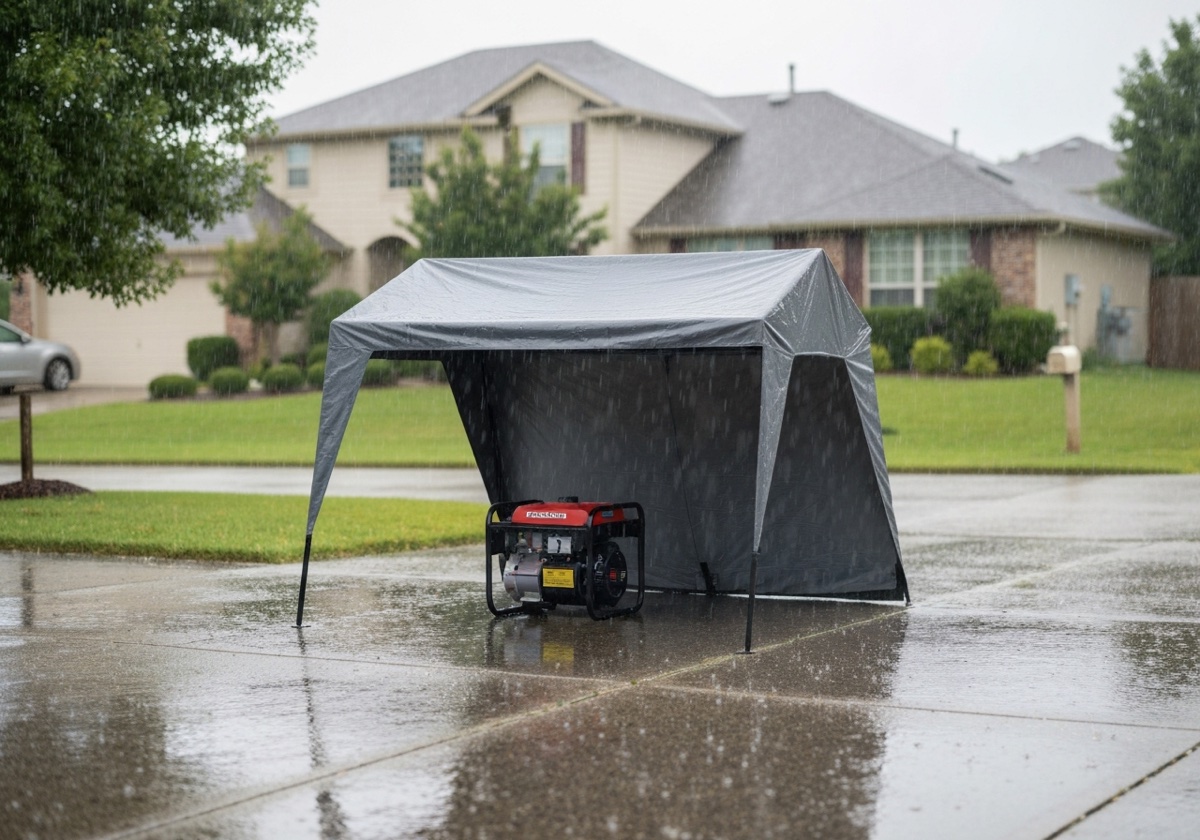
So can you run a portable generator in the rain? The short answer is no, not unprotected, and yes, with the right cover. An exposed generator in the rain risks electrocution for you and expensive damage for the machine. But a generator under a properly designed canopy or generator tent runs safely through storms all the time. Utility crews do it every week.
The trap is that most improvised solutions people reach for, dragging it into the garage, sliding it under the deck, or throwing a tarp over the top, are more dangerous than the rain itself. This guide walks through what actually works, what will get someone hurt, and how to set up so the next storm is a non-event.
Quick Answer: Generators and Rain
- Never run a generator exposed to rain or snow. Water in the outlets and alternator creates a shock and electrocution risk and can destroy the generator.
- Never move it indoors to escape the weather. Not the garage, not the basement, not a covered porch, not under a deck. Carbon monoxide kills far more generator users than electrocution does.
- The safe fix is an open-sided cover: a purpose-built generator tent (GenTent is the best-known category example, roughly $150–$250), a pop-up canopy staked well, or a small permanent open-walled shelter.
- Keep placement rules intact: 20 or more feet from the house, exhaust pointed away from windows and doors, on level ground that will not flood.
- Dry hands, dry connections, GFCI protection, and outdoor-rated cords handle the electrical side.
Why Rain and Generators Are a Dangerous Mix
A portable generator is essentially an engine spinning an alternator that feeds live 120/240-volt outlets, all mounted on an open frame. Nothing about that design is sealed against water.
The electrocution risk is real. Water bridging the outlets, or soaking into the alternator windings, can energize the generator’s frame and anything touching it. A person standing on wet ground who grabs the frame or plugs in a cord can complete the circuit. This is exactly the scenario GFCI outlets exist to interrupt, and it is why OSHA and every generator manual say the same thing: keep it dry.
The damage risk is expensive. Even if nobody gets hurt, water in the outlets and control panel corrodes contacts, trips breakers, and can short the alternator, often turning a roughly $700–$1,200 generator into scrap. Rain sucked into the air intake of a running engine can also cause hydrolock in a heavy downpour.
GFCI trips will shut you down anyway. Most modern portable generators have GFCI-protected outlets, especially on 120V circuits. Moisture on the receptacle faces causes leakage current, the GFCI does its job, and your refrigerator goes dark mid-storm. If a GFCI keeps tripping in wet weather, the answer is a drier setup, never a bypass or workaround.
What NOT to Do (These Shortcuts Hurt People)
- Do not run it in the garage, even with the door open. Carbon monoxide builds up in minutes and drifts into the house. CDC data attributes dozens of deaths in the U.S. every year to generator CO, and open garage doors do not provide enough airflow. This is the number one generator killer, far ahead of electrocution.
- Do not run it in a shed, basement, or crawl space. Same reason, faster.
- Do not run it on a covered porch or under a deck. Exhaust pools under the structure and enters the house through floors, doors, and windows, and it puts a hot muffler and fuel tank against your home.
- Do not drape a tarp directly over a running generator. The tarp traps engine heat and exhaust, can melt onto the muffler, blocks the cooling airflow the engine needs, and can channel rainwater right onto the outlets. A tarp touching the machine is the worst of both worlds.
- Do not plug the generator into a wall outlet. This “backfeeding” energizes utility lines, can kill line workers, and is illegal. Rainstorms are exactly when crews are out working on those lines. Use extension cords or a professionally installed transfer switch or interlock.
Safe Solution 1: A Purpose-Built Generator Tent
The cleanest answer for most homeowners is a canopy designed to mount on the generator’s own frame. GenTent is the best-known name in this category, and similar designs exist from other brands; expect to pay roughly $150–$250.
Check the current price of the GenTent generator running cover on Amazon.
These work because they were engineered around the actual failure points:
- They cover the outlets, control panel, and engine top, the water-sensitive zones, while leaving the sides fully open.
- Open sides preserve cooling airflow and let exhaust escape freely, so there is no CO trap and no overheating.
- They attach to the frame, so they move with the generator and are rated to stay put in strong winds and heavy rain; manufacturers in this category typically rate their canopies for named-storm conditions.
- You can refuel and operate the panel without removing the cover.
If you live somewhere with real storm seasons, this is roughly the cost of two tanks of gas and solves the problem permanently. Check that the model fits your frame style; open-frame generators of roughly 3,000–12,000 watts are the usual fit, while fully enclosed inverter generators often need a canopy solution instead.
Safe Solution 2: A Canopy or DIY Shelter Done Right
A pop-up canopy or a small homemade shelter also works if you respect a few non-negotiable rules:
- Open on all sides, or at minimum two full sides. Walls trap carbon monoxide and heat. If you are tempted to add walls for driving rain, stop at one windward side panel and keep the exhaust side and one other side fully open.
- Generous clearance. Keep roughly 2–3 feet of open space above the generator and on every side, and never let any combustible material sit near the muffler. Portable generator exhaust can exceed several hundred degrees.
- Anchor it like you mean it. A pop-up canopy in storm winds becomes a kite with metal legs. Stake every leg, add weight bags, and tie to fixed points if you can. An unanchored canopy crashing onto a running generator is its own emergency.
- Mind the roof runoff. Position the generator so water pouring off the canopy edges lands away from it and away from your cord connections.
- Elevate the generator slightly on a paver pad, rubber mat, or pressure-treated platform so pooling water cannot reach it. A generator sitting in a puddle is nearly as bad as one in the rain.
For a permanent setup, a small open-walled “generator house,” essentially a roof on four posts, placed 20+ feet from the home works beautifully. Just resist the urge to enclose it; the moment it has four walls and a door, it is an indoor space and off-limits for a running engine.
Placement Rules Still Come First
Weather protection never overrides carbon monoxide rules. Wherever the generator ends up, hold these lines:
- 20 feet or more from the house, and from the neighbor’s house, per CDC and CPSC guidance.
- Exhaust pointed away from windows, doors, vents, and window air conditioners.
- Level, high ground. Not in a swale or low spot that floods during exactly the storms you bought the generator for.
- CO alarms inside the house, on every level and near sleeping areas, with fresh batteries. Battery-powered CO alarms cost roughly $20–$40 and are the last line of defense.
- Consider a CO-shutoff generator. Newer models with CO sensors (marketed under names like CO Sense, CO Guard, CO Shield) shut down automatically if exhaust accumulates. Worth prioritizing when you buy or upgrade.
Handling Electricity on Wet Ground
Even with the generator itself under cover, you and the cords are still out in the weather.
- Use heavy-duty outdoor-rated extension cords (12-gauge for most loads, 10-gauge for long runs or big loads), fully uncoiled, routed so connections do not lie in puddles. Elevate cord junctions on a brick or hook them off the ground.
- Keep plug connections dry. Weatherproof cord-connection covers cost a few dollars; a zip-tied plastic sleeve works in a pinch as long as it sheds water and is not touching anything hot.
- Dry hands, dry shoes. Plug and unplug from a dry position, and shut the generator’s breakers off before connecting or disconnecting loads.
- Grounding: for typical home use, plugging appliances into the generator’s outlets with extension cords, the generator’s frame bonding is sufficient and no ground rod is required under National Electrical Code guidance. If you connect through a transfer switch, grounding and neutral bonding must be configured correctly, which is a job for the electrician who installs the switch. When in doubt, follow the manual for your specific model.
See current prices for heavy duty 10 gauge outdoor extension cords on Amazon.
A Realistic Storm-Night Scenario
Say a summer storm knocks out power to your street at 9 p.m. with steady rain forecast overnight. Here is what a prepared setup looks like: your 4,500-watt generator lives on two concrete pavers 25 feet from the back of the house, with a frame-mounted generator tent already installed. You carry it out (or wheel it), check the oil, point the exhaust toward the back fence, and start it with dry hands under the canopy. One 12-gauge cord runs to the refrigerator, another to a power strip for lamps, phones, and the Wi-Fi router, with both cord junctions looped over a patio chair to stay out of the puddles. Total load: roughly 800 watts, well within limits. The CO alarms inside were tested last month. You refuel once at 6 a.m., after shutting down and letting the engine cool for 15 minutes. Nothing about the rain changed your night except the sound on the canopy.
That entire setup, canopy, cords, pavers, and CO alarms, costs roughly $250–$350 beyond the generator itself. It is the difference between a safe, boring outage and an emergency-room story.
Snow, Ice, and Freezing Rain
Winter adds two twists. First, snow can drift against the generator and block the cooling intake or bury the exhaust, so keep the sides shoveled clear and the unit elevated above expected accumulation. Second, cold starts are harder: use fresh stabilized fuel, consider synthetic 5W-30 oil for easier cranking, and let the engine warm briefly before loading it. The same open-sided canopy that sheds rain sheds snow; just knock heavy buildup off the roof. In ice storms, handle cords gently, since cold insulation gets stiff and brittle.
Storing a Generator Outside vs. Running It Outside
One distinction trips people up: a fabric or vinyl storage cover is for a generator that is off and cool. It keeps dust and moisture off between outages, and it comes fully off before you start the engine. A running generator needs a ventilated canopy, never a fitted cover. If your generator lives outdoors year-round, use both: storage cover when idle, canopy when running, and run it under load for 15–20 minutes monthly so storm night is never its first workout.
Frequently Asked Questions
Will rain ruin my generator if it gets caught in a shower?
A brief sprinkle on a generator that is shut off usually causes no harm; dry the outlets and control panel thoroughly before the next start. A generator that ran exposed in real rain, or one soaked while running, needs a careful inspection, and if water reached the outlets or alternator, have it checked before trusting it again. Repeated wet running dramatically shortens its life even when nothing fails immediately.
Can I run my generator in the garage with the door open?
No. Carbon monoxide accumulates even with the door fully open, and it migrates into the house. CO from generators kills more people in the U.S. each year than any other generator hazard. The generator goes outside, 20 or more feet from the house, every time, in every weather.
Do I need to ground my generator with a ground rod in wet weather?
For the typical setup, appliances plugged into the generator’s own outlets via extension cords, no. The frame serves as the grounding point under NEC guidance, wet weather or not. A ground rod becomes relevant mainly in certain transfer-switch and jobsite configurations. Follow your model’s manual, and have any transfer switch installed and bonded by a licensed electrician.
Are inverter generators more rain-safe than open-frame generators?
Their enclosed plastic housings shed incidental drizzle a bit better, but they are not rain-rated, and their outlets and vents are just as vulnerable. Treat an inverter generator exactly like an open-frame model: covered, ventilated, and away from the house. Frame-mounted generator tents often do not fit enclosed inverter bodies, so a canopy is usually the right shelter for them.
This article is for general information only and is not a substitute for your generator manufacturer’s instructions or local electrical codes. Carbon monoxide from generators is deadly and often gives no warning; always run generators outdoors, far from openings into the home, keep working CO alarms inside, and consult a licensed electrician for any connection to household wiring.