
This post contains affiliate links. If you buy through them, we may earn a commission at no extra cost to you.
Walk into the portable power station market in 2026 and three names dominate every search result, every big-box shelf, and every “best of” list: EcoFlow, Bluetti, and Jackery. All three sell capable, safe, modern lithium power stations. All three have shipped millions of units. And all three have loyal owners who will tell you their brand is the obvious choice.
The truth is more interesting. These brands have taken genuinely different engineering paths, and the differences show up exactly where it matters: how fast the battery recharges, how many years it lasts, how big your system can grow, and how much you pay per watt-hour of storage.
This is a research-based comparison built on manufacturer specifications and consistent patterns in owner feedback, not lab testing. You can read exactly how we research and compare products. By the end, you will know which brand fits the way you actually plan to use it.
Browse current prices: EcoFlow on Amazon | Bluetti on Amazon | Jackery on Amazon.
Editor’s quick verdict: EcoFlow vs Bluetti vs Jackery
- Choose EcoFlow for the fastest recharging and the deepest accessory ecosystem, if you are willing to pay a premium.
- Choose Bluetti for the best value per watt-hour and the longest battery lifespan, if you can accept a heavier unit and a simpler app.
- Choose Jackery for the lightest, simplest grab and go unit from the most recognized name, best for camping, road trips and shorter outages.
Every section below explains why, category by category.
Quick Answer: Which Brand Wins in 2026?
- EcoFlow wins for most home-backup buyers. The fastest AC charging in the industry, the most polished app, and X-Boost technology that runs high-wattage appliances on mid-size units make it the best overall ecosystem.
- Bluetti wins on value and longevity. As the earliest major adopter of LiFePO4 chemistry, Bluetti delivers more watt-hours per dollar and huge expandable capacity, ideal for off-grid and whole-room backup on a budget.
- Jackery wins for grab-and-go simplicity. The lightest units in each class, a long reliability reputation, and well-matched solar bundles make it the best choice for camping, tailgating, and set-it-and-forget-it emergency kits.
None of these is a bad purchase. The rest of this article explains where each brand pulls ahead, category by category.
Brand Overviews: Three Different Philosophies
EcoFlow: The Tech-Forward Ecosystem
EcoFlow was founded by former drone battery engineers, and it shows. The brand’s signature moves are speed and software. Most EcoFlow units recharge from a wall outlet dramatically faster than competitors, with several models going from empty to 80% in roughly an hour. X-Boost, EcoFlow’s soft-start voltage regulation, lets a 1,800W unit run many appliances rated above its output, such as space heaters and kettles, by gently reducing the voltage delivered.
The EcoFlow app is widely regarded as the most polished in the category: firmware updates, charge-speed control, custom charge limits to extend battery life, and remote monitoring. EcoFlow has also built the deepest home-integration lineup, from smart home panels to whole-house battery systems, so a small purchase today can grow into serious infrastructure later.
Bluetti: The LiFePO4 Pioneer and Value Leader
Bluetti bet on lithium iron phosphate (LiFePO4) chemistry before it was fashionable, and the market eventually followed. LiFePO4 cells typically survive 3,000 to 4,000 charge cycles before dropping to 80% capacity, several times the life of older NMC lithium cells, and they are more thermally stable.
Bluetti’s other calling card is expansion. Many of its units accept external battery packs, letting you start with roughly 2,000Wh and grow to 8,000Wh or more without replacing the core unit. And on a straight price-per-watt-hour basis, Bluetti is consistently the cheapest of the three at street prices, especially during its frequent sales.
Jackery: The Reliability Reputation, Lighter and Simpler
Jackery is the oldest household name in this space and built its reputation on units that simply work for years with zero fuss. Its current generation has moved to LiFePO4 chemistry as well, closing its main historical gap, while keeping the brand’s defining trait: low weight. Jackery units are routinely the lightest in their capacity class, sometimes by 10 pounds or more.
Jackery also leans hard into solar bundles. Its “Solar Generator” kits pair a power station with the brand’s own folding panels at package prices, which removes the guesswork of matching panel voltage and connectors, a real friction point for first-time solar users.
Battery Chemistry and Lifespan
In 2026 this category is nearly a three-way tie on chemistry: all three brands now use LiFePO4 in their current mainstream lines. The differences are in the fine print.
Bluetti and Jackery both rate their current LiFePO4 models at roughly 3,000 to 4,000 cycles to 80% capacity. EcoFlow’s ratings sit around 3,000 cycles on most models. In practice, at a cycle every single day, all three should retain most of their capacity for eight years or more. For typical backup use of a few dozen cycles per year, the battery will outlast the electronics around it.
Edge: Bluetti, by a nose, for its longer track record with the chemistry and consistently high cycle ratings, but this is the closest category in the comparison.
Charging Speed
Here the gap is real. EcoFlow pioneered high-speed AC charging with onboard inverter-chargers, and most of its lineup refills from a wall outlet in roughly 1 to 1.5 hours. Bluetti’s recent models have largely caught up, with “turbo” modes bringing many units to 80% in under an hour, though some models default to slower speeds to protect battery life. Jackery has added emergency fast-charge modes to its v2 lineup, but across the whole range it is generally the slowest of the three from a wall outlet.
Why does this matter? Two scenarios: topping up before a storm hits, and recharging from a generator during an extended outage, where every minute of generator runtime costs fuel. Fast AC charging is one of the most underrated specs in this category.
Edge: EcoFlow, with Bluetti close behind on its newest models.
Inverter Output and Surge Handling
Rated output in each class is broadly similar, but the brands handle overloads differently. EcoFlow’s X-Boost stretches a mid-size unit to run resistive loads (heaters, kettles, hair dryers) rated well above the inverter’s nominal output. Bluetti offers a similar feature called Power Lifting Mode on many models. Both work well for simple resistive appliances but are not suited to sensitive electronics or motor-driven loads.
Jackery generally skips voltage-reduction tricks and instead specs honest, high surge ratings, often double the continuous output, which is what actually matters for starting refrigerators and power tools.
Edge: EcoFlow for versatility with everyday household appliances; Jackery is arguably the most straightforward for motor loads.
App and Ecosystem
This is EcoFlow’s home turf. The app offers granular control: charge speed sliders, charge limits (stopping at 85% to extend cycle life), timers, firmware updates, and energy monitoring. EcoFlow’s broader ecosystem, including smart home panels that integrate a power station into your circuit panel, alternator chargers for vehicles, and stackable whole-home batteries, is the deepest of the three.
Bluetti’s app covers the essentials competently and has improved steadily, and its own home-integration hardware is growing. Jackery’s app is the simplest of the three, which fits the brand: fewer options, less to configure, less to go wrong.
Edge: EcoFlow, clearly.
Expandability
If you think you will ever want more capacity, this section matters more than any other, because you cannot bolt expansion onto a unit that does not support it.
Bluetti built its brand on modular systems: many of its mid-size and large units accept one or two external battery packs, taking a roughly 2,000Wh base unit to 6,000–8,000Wh over time. EcoFlow’s Delta series offers comparable expansion on most models, typically with proprietary extra batteries that click in via a single cable. Jackery has added expandable models to its lineup (its larger “Plus” and pro-tier units), but expansion remains a smaller part of its range.
Edge: Bluetti, with EcoFlow a close second. Buy Jackery for what it is on day one, not for what you might grow it into.
Solar Input
Bluetti has historically been generous with solar input ceilings; several of its 2kWh-class units accept around 1,200W of panels, meaning a full recharge in roughly 2 hours of good sun. EcoFlow’s comparable units typically accept around 500–1,000W depending on the model. Jackery’s input ceilings are usually the lowest per class, but its bundled panels are well matched to the unit, so real-world first-time setup is often the smoothest.
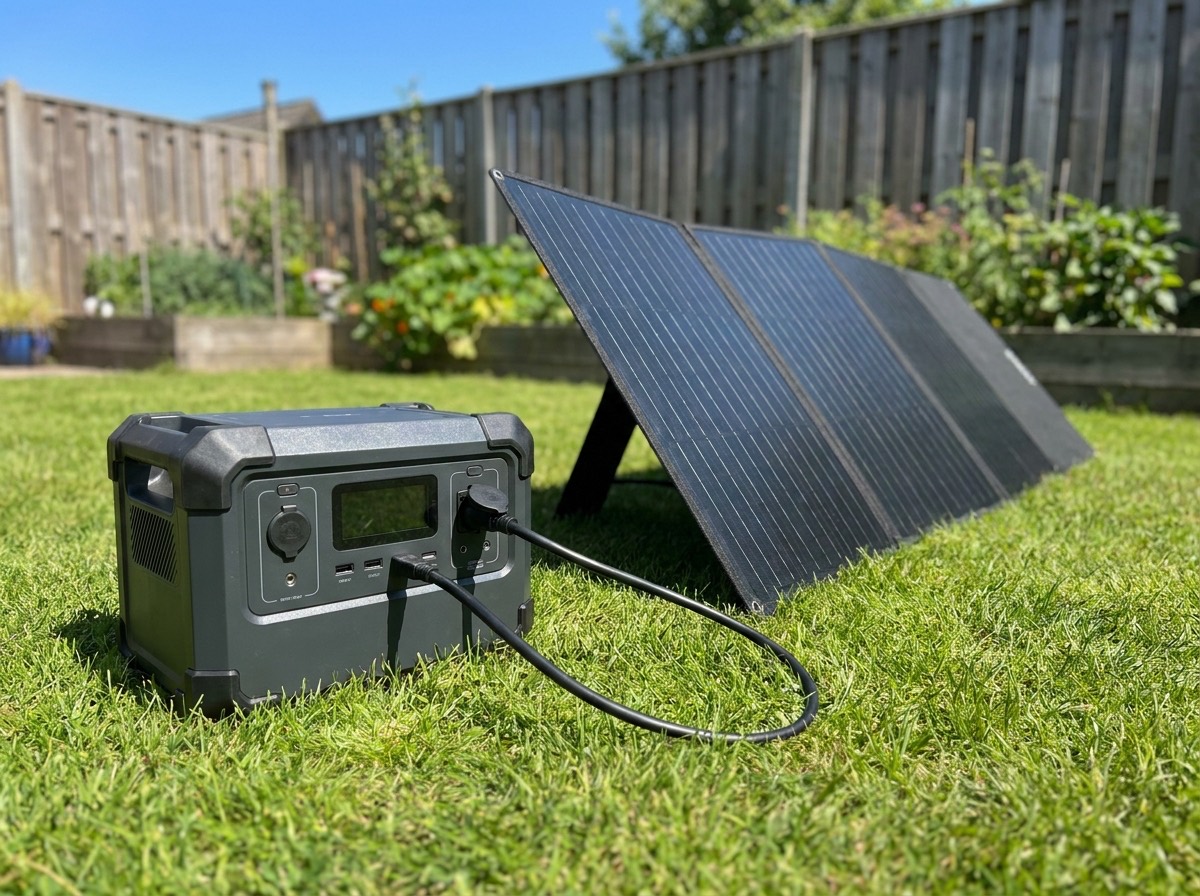
One practical note that owner feedback surfaces again and again: all three brands use different solar connectors and voltage windows, so mixing third-party panels requires checking specs carefully. Bluetti and EcoFlow are generally the friendliest to third-party panels.
Edge: Bluetti for raw input capacity and flexibility; Jackery for beginner-friendly bundles.
Warranty and Support
All three brands now offer 5-year warranties on their current LiFePO4 flagship lines, a big improvement over the 2-year coverage that was standard a few years ago. Patterns in owner feedback suggest all three have grown support operations in the US, with turnaround measured in days rather than weeks. Jackery’s longer consumer track record earns it a slight reputational edge on hassle-free replacements; EcoFlow ships frequent firmware updates that have fixed real bugs, which cuts both ways, since it also means more firmware to update.
Edge: effectively a tie, with Jackery’s reputation for simplicity giving it a slight nod.
Price per Watt-Hour
List prices mislead in this category because all three brands discount constantly. At typical street prices in 2026, mid-size LiFePO4 units land roughly here: Bluetti around $0.50–$0.65 per Wh, EcoFlow around $0.60–$0.75 per Wh, and Jackery around $0.65–$0.85 per Wh. Jackery charges a premium for weight savings and brand trust; Bluetti undercuts everyone during sales.
Edge: Bluetti. If budget is the deciding factor, wait for a Bluetti sale and buy more capacity than you thought you could afford.
Head-to-Head: Representative Mid-Size Models
The clearest way to compare the brands is to line up their most popular 1kWh-class units. Specs below are approximate and drawn from manufacturer documentation; check current listings before buying.
| Spec (approx.) | EcoFlow Delta 2 | Bluetti AC180 | Jackery Explorer 1000 v2 |
|---|---|---|---|
| Capacity | ~1,024Wh | ~1,152Wh | ~1,070Wh |
| Chemistry | LiFePO4 | LiFePO4 | LiFePO4 |
| Continuous output | ~1,800W | ~1,800W | ~1,500W |
| Overload feature | X-Boost to ~2,400W | Power Lifting to ~2,700W | ~3,000W surge |
| AC recharge (to ~80%) | Roughly 50–60 min | Roughly 45–60 min (turbo) | Roughly 1 hour (emergency mode) |
| Max solar input | ~500W | ~500W | ~400W |
| Expandable | Yes (extra battery) | No (on this model) | No (on this model) |
| Weight | ~27 lbs | ~35 lbs | ~24 lbs |
| Typical street price | Around $650–$800 | Around $600–$700 | Around $700–$800 |
The table tells the brand story in miniature: EcoFlow balances speed, expansion, and weight; Bluetti gives you the most capacity and output headroom for the least money but weighs the most; Jackery is the lightest with the simplest, most conservative engineering.
The Verdicts
Best overall ecosystem: EcoFlow
If you want one brand that can start with a bedside backup unit and scale to vehicle charging, smart panels, and whole-home battery storage, EcoFlow is the clear pick. The charging speed and app maturity seal it. This is the default recommendation for most home-backup buyers.
Best value and longevity: Bluetti
If you are optimizing dollars per watt-hour, planning an off-grid or expandable system, or feeding big solar arrays, buy Bluetti. You give up some app polish and carry more weight, and you get more battery for your money with chemistry the brand has been refining longer than anyone.
Best grab-and-go: Jackery
If the unit lives in a closet until a camping trip or an outage, and you value light weight and zero configuration over maximum specs, Jackery is the pick. The solar bundles are the easiest on-ramp to panel charging in the industry.
Which Brand Should You Choose? Buyer Profiles
- Choose EcoFlow if… you want the fastest recharge before storms, plan to grow into home integration, run occasional high-wattage appliances like heaters or kettles, or you simply enjoy having deep app control over your gear.
- Choose Bluetti if… you are building the biggest system your budget allows, want expandable capacity for off-grid or RV living, plan a large solar array, or you shop sales and want the lowest cost per watt-hour.
- Choose Jackery if… you carry the unit frequently (campsites, tailgates, job sites), want a beginner-proof solar kit, or you prioritize a long reliability track record over spec-sheet leadership.
- Choose any of the three if… your only need is occasional emergency backup for a fridge, phones, and lights. All three will do that job well for a decade. Buy whichever is on the deepest sale in the size you need.
Read our full reviews of these models
Want a closer look at a specific unit before you decide? We have detailed breakdowns of the current models from each brand:
- EcoFlow River 2 Pro review
- EcoFlow Delta 2 Max review
- Bluetti AC180 review
- Jackery Explorer 1000 v2 review
- Anker SOLIX C1000 review, a strong alternative to all three
Still weighing a power station against a generator? Compare them in our power station vs generator guide, or start with the best power stations under $500.
Frequently Asked Questions
Is Jackery still using older battery chemistry?
No. Jackery’s current-generation lineup, including the Explorer v2 and Plus series, uses LiFePO4 chemistry rated for thousands of cycles, the same class of cells as EcoFlow and Bluetti. Older Jackery models still on clearance may use NMC cells with shorter cycle life, so check the specific model before buying discounted stock.
Which brand lasts the longest?
With all three on LiFePO4, expected battery life is similar: roughly 3,000+ cycles to 80% capacity, which is many years of heavy use. Longevity differences now come down to electronics, firmware, and build quality, where owner feedback does not show a decisive winner. Bluetti’s longer LiFePO4 track record and high cycle ratings give it a slight edge on paper.
Can I use third-party solar panels with these brands?
Usually yes, as long as the panel’s voltage and current fall within the unit’s input window and you have the right connector adapter (most units accept the common XT60 or DC7909 inputs via adapters). Bluetti and EcoFlow tend to have wider voltage windows. Jackery works best with its own panels, which is by design.
Are these power stations safe to run indoors?
Yes. Unlike fuel generators, battery power stations produce no exhaust and can run silently in a bedroom. That indoor safety is the main reason many households choose one of these brands over a cheaper gas generator for backup power.
Specifications and prices in this article are approximate, based on manufacturer documentation at the time of writing, and change frequently as brands refresh their lineups. Always verify current specs and pricing before purchasing.