
This post contains affiliate links. If you buy through them, we may earn a commission at no extra cost to you.
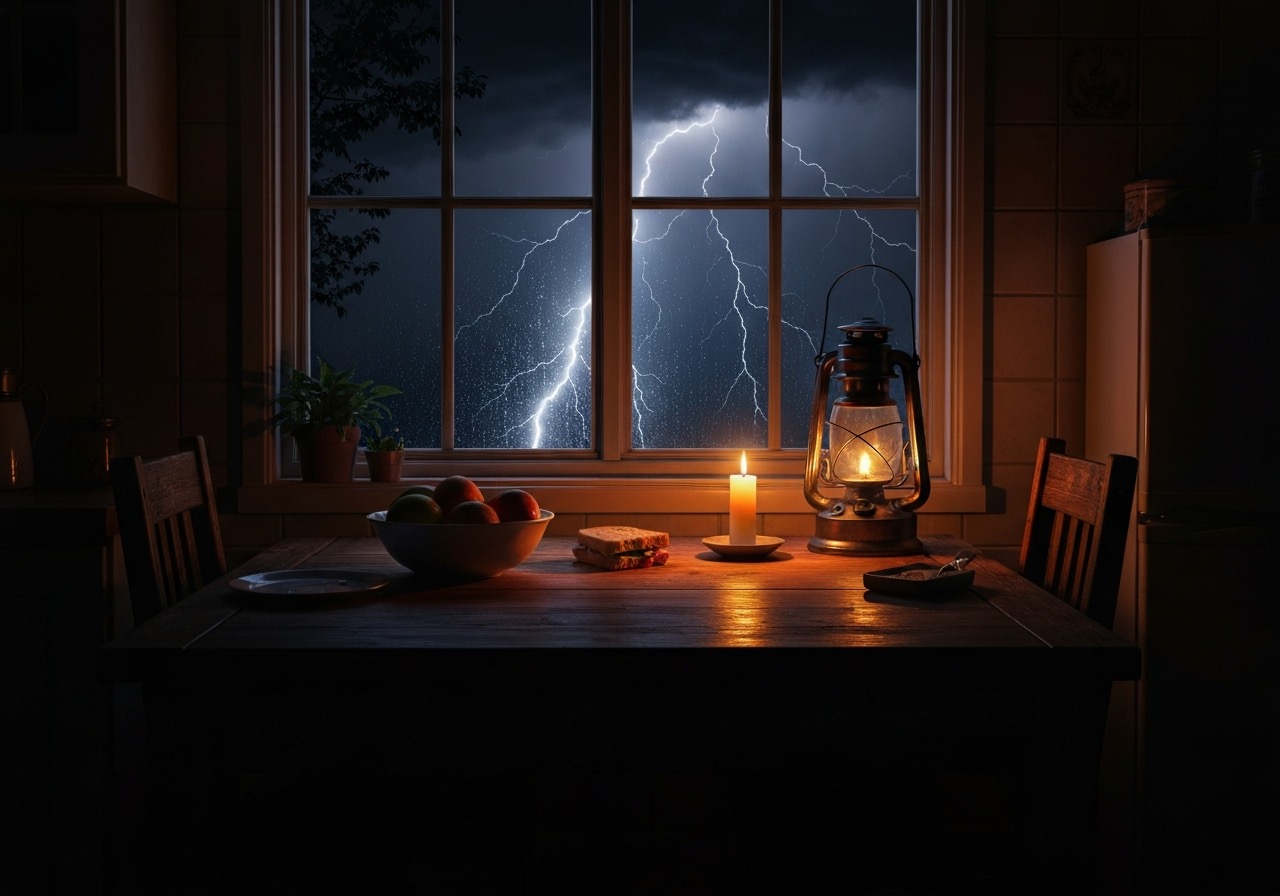
There is a moment, usually on day two of a hurricane blackout, when the mood in a house changes. The novelty of candlelight wears off. The fridge has been warm for hours, the phones are at 15 percent, the house is 88 degrees, and nobody knows when the power is coming back. Families who prepared for a multi-day outage barely notice that moment. Families who prepared for “a few hours” hit a wall.
With hurricane season running June through November and the peak weeks approaching, this guide is about getting your home ready for the realistic scenario: not a flicker, but three to seven days without electricity. Everything here can be done in a weekend, and most of it costs less than a single generator.
Plan for 72 Hours Minimum, Build Toward a Week
Utilities restore power to hospitals, water plants, and dense urban circuits first. If you are on a residential branch line, and especially if you are rural, you are near the back of the queue. After major hurricanes, restoration commonly takes several days, and hard-hit areas have waited two weeks or more.
So set your planning bar honestly: fully self-sufficient for 72 hours, stretched supplies and a workable routine for 7 days. Every section below is sized to that standard. For the deeper version of this exercise, including two-week scenarios, see our guide to preparing for extended power outages.
The Food and Refrigeration Plan
Food is where multi-day outages get expensive and risky. The rules that matter, straight from USDA guidance:
- An unopened refrigerator keeps food safe for about 4 hours
- A full freezer holds a safe temperature for about 48 hours, a half-full one for about 24
- Perishables above 40 degrees Fahrenheit for more than 2 hours should be discarded. When in doubt, throw it out
Your job before the storm: turn both compartments to their coldest settings, freeze every water bottle and gel pack you own, and group freezer contents together so they hold cold as a block. Move the food you plan to eat first into one section of the fridge so you can grab it in seconds instead of standing there with the door open.
Then give your fridge a backup: a quality cooler. On day two, you shift the essentials (milk, medications, proteins for tonight’s dinner) into a well-insulated cooler packed with your frozen bottles, and stop opening the fridge entirely. A large rotomolded or thick-walled cooler can hold safe temperatures for days, which turns your remaining ice into a genuine refrigeration system instead of a slowly melting puddle.
Check the current price of a large insulated cooler on Amazon.
Stock a week of no-cook food as the backbone: canned proteins and beans, peanut butter, crackers, tortillas, shelf-stable milk, dried fruit, and a manual can opener. If you have a propane grill or camp stove, you can cook, but only outdoors. For the complete temperature rules and a what-to-toss table, see our guide on keeping food safe during a power outage.
Light: One Source Per Person, Plus One Per Room
Candles cause house fires every hurricane season, and a single flashlight for a family of four means three people sitting in the dark. The standard that actually works for multi-day outages:
- A headlamp or flashlight for each person (headlamps free your hands for cooking and cleanup)
- A lantern for each main living space, so rooms feel normal after sunset
- Spare batteries for all of it, stored where the lights are
LED camping lanterns are the workhorse here. Modern ones run 20 to 100 hours per set of batteries depending on brightness, are safe around kids and pets, and many recharge by USB so your power bank or car can top them up. Two or three lanterns transform a blackout evening from miserable to almost cozy.
Check the current price of an LED camping lantern on Amazon.
Water and Sanitation
Store one gallon per person per day, one week minimum if you can manage the space. Before the storm hits, fill the bathtub and every large pot you own: that water flushes toilets and washes dishes, preserving your stored drinking water. If your home is on a well, remember that no power means no pump, so your stored water is all the water you have.
Add the unglamorous items people forget: heavy trash bags, paper plates and cups (dishwashing burns water), wet wipes, and hand sanitizer. A camp-style rule that toilets get flushed with bucket water only when necessary saves a surprising number of gallons.
Heat Is the Hidden Threat
August blackouts in the South mean days of 90-plus heat with no air conditioning. This is not just uncomfortable; heat is consistently among the deadliest weather hazards in the United States, and the risk climbs for infants, older adults, and anyone with heart or respiratory conditions.
- Battery-powered or USB fans for each bedroom, charged before the storm
- Sleep on the lowest floor; heat stacks upstairs
- Block sun-facing windows with blankets or foil during the day
- Wet washcloths on the neck and wrists cool the body fast
- Know the nearest cooling center or a friend with a generator
Power, Communication, and Cash
Even without a generator, you can cover the essentials for days with layered small power: charged power banks for every phone, a car charger (your vehicle is a generator for electronics; run it outdoors, never in the garage), and if the budget allows, a portable power station for the fridge-and-fans tier. Charge everything to 100 percent the night before landfall, switch phones to low power mode, and designate one phone as the “on” phone while others stay off in rotation.
Keep cash in small bills. After a hurricane, card readers, ATMs, and gas pumps in the outage zone are all down together.
Protect the House Itself
Multi-day outages rarely end cleanly. Power often comes back in surges, flickers on and off several times, or returns at abnormal voltage while crews work the lines. That is how blackouts quietly kill TVs, computers, and refrigerator control boards.
- When the power first goes out, unplug sensitive electronics: TVs, computers, game consoles, and anything with a delicate circuit board
- Leave one lamp switched on so you know the moment power returns
- Wait a few minutes after restoration before plugging major appliances back in, and stagger them rather than starting everything at once
- If your home has a garage door opener, find the manual release cord now and practice using it; a car trapped behind a dead opener is a common day-one surprise
- Know where your main water shutoff is, in case the storm damages plumbing while the house is dark
Whole-home surge protection installed at the panel is the permanent fix, but even quality plug-in surge strips on your most expensive electronics are worthwhile before a storm season.
Your 48-Hour Countdown
| Time before landfall | Action |
|---|---|
| 48 hours | Fridge and freezer to coldest. Freeze water bottles. Laundry and dishes done. Test lanterns and fans. |
| 36 hours | Fill vehicle tanks. Get cash. Refill any prescriptions. Charge power banks and power station. |
| 24 hours | Fill bathtub and containers. Stage a lantern in each room and a flashlight per person. Cooler and ice packs ready. |
| 12 hours | Phones to 100 percent. Eat or cook the most perishable food. Final check of the power outage checklist. |
Frequently Asked Questions
How long will food last in the fridge during a blackout?
About 4 hours if the door stays closed. After that, move essentials to a pre-chilled cooler with ice or frozen bottles and treat the fridge as a cabinet. A full freezer buys you about 48 hours.
Do I need a generator to get through a multi-day outage?
No. Water, no-cook food, coolers, lanterns, battery fans, and power banks will carry a healthy household through a week safely. A generator adds comfort and protects your freezer’s contents, but preparation beats horsepower.
What should I do about medications that need refrigeration?
Put them in a small dedicated cooler with ice packs, opened as rarely as possible, and check manufacturer guidance: many medications, including some insulins, tolerate room temperature for a limited number of days. Ask your pharmacist before the season starts.
How do I keep kids calm during a long blackout?
Structure and light. Keep meal and bed times normal, give every child their own flashlight, and stock a “blackout box” of card games, glow sticks, and books that only comes out when the power is off. Dread turns into a campout surprisingly fast.