
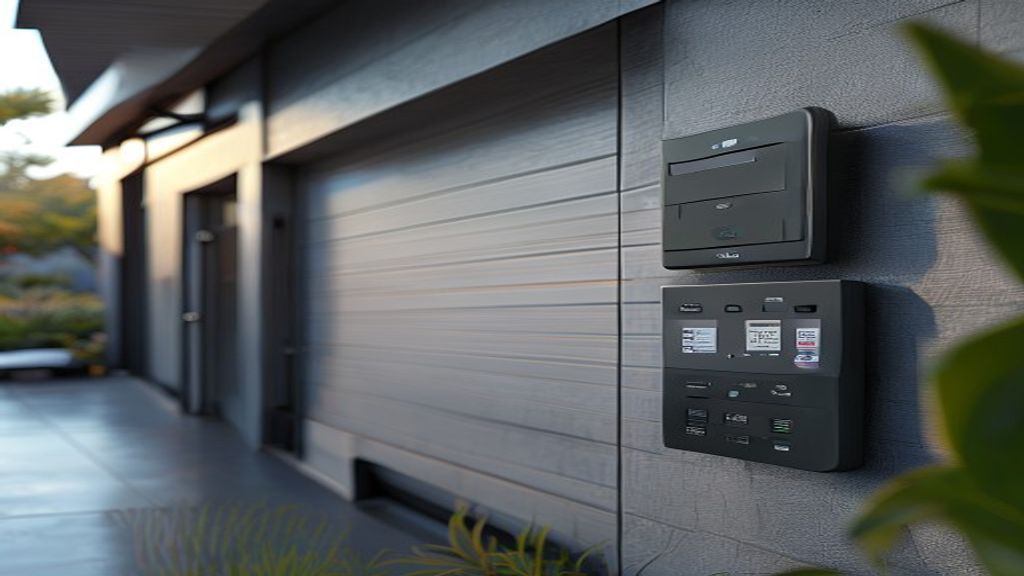
You bought a home battery to keep the lights on during outages. It sits on your garage wall, fully charged, doing absolutely nothing 360 days a year. Meanwhile, your utility is desperately short on power every summer afternoon and is willing to pay homeowners for help.
That is the idea behind a virtual power plant, or VPP: your utility (or a program partner) pays you to let them draw a little energy from your battery during the handful of hours each year when the grid is most stressed. For many owners, that adds up to roughly $200 to $1,000 or more per year for doing essentially nothing.
This guide explains how VPP programs work in plain language, what the major programs actually pay, the real trade-offs, and how to check whether your battery and your ZIP code qualify.
Quick Answer: VPP Programs at a Glance
- What it is: You enroll your home battery in a program that discharges it to the grid (or to your house) during peak-demand events, and you get paid for the energy or capacity you provide.
- Typical earnings: Roughly $200–$1,000+ per year, depending on your region, program, and battery size. New England’s ConnectedSolutions and Texas event-based programs sit at the high end.
- What you need: A compatible smart battery (Tesla Powerwall, Enphase, and similar systems), internet connectivity, and a utility or grid territory that runs a program.
- The catch: Extra battery cycling, a battery that may be partially drained when an event ends, and contract terms that vary widely. Most programs let you set a reserve floor so you are never left empty before an outage.
- Bottom line: A good VPP can cut the effective payback period of a home battery by several years. If a program exists in your area, it is usually worth enrolling.
What a Virtual Power Plant Actually Is (No Jargon Version)
On the hottest afternoon of the year, everyone’s air conditioner runs at once and the grid strains to keep up. Historically, utilities solved this by firing up expensive “peaker” power plants that sit idle most of the year and run for maybe 50–100 hours annually.
A virtual power plant replaces that peaker plant with thousands of home batteries acting together. When demand spikes, the program operator sends a signal over the internet, and every enrolled battery quietly discharges a few kilowatt-hours. Ten thousand homes each contributing 5 kilowatts is a 50-megawatt power plant built with money homeowners already spent.
Because a real peaker plant is so expensive, utilities can pay battery owners well and still come out ahead. That is why VPP payments are surprisingly generous: you are not selling ordinary electricity, you are selling electricity at the exact moment it is most valuable.
Two payment models dominate:
- Per-event pricing: You are paid for each kilowatt-hour your battery exports during an event, often at rates around $1–$2 per kWh (versus the roughly $0.10–$0.30 you normally pay for power). Tesla’s Texas and California VPPs work this way.
- Capacity payments: You are paid a flat rate per kilowatt of average performance across the season, regardless of exact energy delivered. ConnectedSolutions in New England pays roughly $200–$400 per kilowatt per summer this way.
How Enrollment Actually Works
Enrolling in a VPP is usually easier than people expect, because the battery manufacturer handles most of it.
- Step 1: Check eligibility. Programs are tied to specific utility territories and battery brands. Tesla, Enphase, and other major manufacturers show available programs for your address directly in their apps.
- Step 2: Sign up through the app or utility portal. You agree to the program terms, confirm your utility account number, and set your preferences (like your backup reserve level).
- Step 3: Wait for approval. The utility verifies your interconnection agreement, which can take a few weeks. If your battery was permitted and installed professionally, this is a formality.
- Step 4: Events happen automatically. You typically get a notification the day before or hours before an event. The battery charges up beforehand, discharges during the event window (usually 2–4 hours on summer evenings), and recharges afterward. You do nothing.
- Step 5: Get paid. Depending on the program, payment arrives as a check, a bill credit, or a deposit through the manufacturer’s app, usually quarterly or at the end of the season.
Most programs call somewhere between 10 and 60 events per year, concentrated in June through September, each lasting 2 to 4 hours. Nearly all let you skip a few events per season without penalty.
What Real Programs Pay: The Major Categories
Programs change names and rates frequently, so treat these as representative categories and confirm current terms before enrolling.
Tesla VPP programs (California, Texas, and expanding)
Tesla runs some of the largest residential VPPs in the country. In California, Powerwall owners with participating utilities have been paid around $2 per kWh delivered during events; a household discharging 10 kWh per event across 15–20 events can see roughly $300–$400 per season. In Texas, Tesla Electric bundles a retail electricity plan with VPP participation, paying owners for exported power during scarcity events, when wholesale prices can spike dramatically. Earnings there vary with the weather, but active summers have produced several hundred dollars per Powerwall.
ConnectedSolutions (New England)
This is arguably the most lucrative and predictable program in the country. Utilities across Massachusetts, Rhode Island, Connecticut, and New Hampshire pay battery owners a capacity rate of roughly $200–$400 per kilowatt of average summer performance. A battery that reliably delivers 5 kW during events can earn roughly $1,000–$2,000 per summer at the top rates. Payments are per kilowatt, not per kilowatt-hour, which rewards batteries with strong power output. The program is open to multiple battery brands, including Tesla, Enphase, and others, through participating installers.
Enphase and other manufacturer-run programs
Enphase operates grid services programs in multiple states, enrolling its IQ Battery owners into utility events through the Enphase app. SunPower, Sonnen, and other manufacturers run similar arrangements, often branded as “grid rewards” or “bring your own battery” programs, typically paying roughly $100–$500 per year depending on the utility and battery size.
Texas aggregator and retail plans
Because Texas has a deregulated market with dramatic price spikes, several retail providers and aggregators pay battery owners for event participation or offer bill credits tied to exports. The upside potential is high in a hot summer; the variability is also higher than in fixed-rate programs.
“Bring your own device” utility programs elsewhere
Dozens of utilities in states like Vermont, New York, Colorado, Arizona, and Hawaii run smaller programs, ranging from upfront enrollment incentives (sometimes $500–$1,000 one time) to modest annual payments of roughly $100–$300. Green Mountain Power in Vermont famously offers heavily subsidized Powerwalls in exchange for grid access.
A Realistic Worked Example: What One Battery Earns
Say you own a 13.5 kWh battery (Powerwall-class) in Massachusetts and enroll in a ConnectedSolutions-style program paying $275 per kilowatt per summer.
- Your battery can discharge at 5 kW continuously.
- You keep a 20% backup reserve, and after accounting for events where the battery tapers off, your measured average performance across the summer’s events comes out to 4 kW.
- Season payment: 4 kW × $275/kW = $1,100 for the summer.
Now compare that against the cost side. The program calls roughly 40 events of 3 hours each. If your battery contributes an average of 4 kW for 3 hours per event, that is 12 kWh per event, or about 480 kWh cycled over the season, roughly 35 extra full cycles on a battery rated for several thousand cycles. Recharging that energy at an off-peak rate around $0.15/kWh costs roughly $72 (and much less if solar does the recharging).
Net result: roughly $1,000 in your pocket for one summer, in exchange for about 1% of your battery’s rated cycle life. Not every program pays this well, New England is the best case, but the structure of the math is the same everywhere: high-value peak energy out, cheap off-peak energy in.
What You Need to Qualify
- A compatible battery. The battery must be remotely controllable. Tesla Powerwall, Enphase IQ Battery, and most modern grid-tied systems qualify. DIY setups and most portable power stations do not (though a few manufacturers are starting to enroll wall-mounted “plug-in” batteries in select markets). Our roundup of the best whole house battery backup systems highlights models that work with most major programs.
- A smart, grid-interactive inverter. Per-event export programs require an inverter approved to push power to the grid, plus a standard interconnection agreement with your utility. Some programs only discharge into your home (reducing your draw) rather than exporting, which loosens this requirement.
- The right utility territory. This is the biggest filter. VPPs exist where regulators or markets created them: California, Texas, New England, and a growing list of other states. If your utility has no program, no battery brand can enroll you.
- Reliable internet. Event signals travel over your home Wi-Fi. A battery that drops offline during events gets measured at zero and paid accordingly.
The Trade-Offs Nobody Should Skip
Battery cycling. Every event adds wear. In practice the impact is modest, a typical season adds a few dozen full-cycle equivalents to a battery warrantied for 3,000–4,000 cycles or 10 years, but it is not zero. If your battery’s warranty is throughput-based (total energy delivered), VPP participation consumes that allowance faster.
Your reserve during storm season. The scariest scenario: a VPP event drains your battery to 20% at 8 p.m., and a storm knocks out your power at 9. Most programs let you set a backup reserve floor (commonly 20–30%) that events cannot touch, and several automatically suspend events when severe weather is forecast. Raise your floor during hurricane or ice-storm season if your program allows.
Contract terms. Some programs require multi-season commitments or claw back upfront incentives if you leave early; others are fully opt-out-anytime. Capacity-payment programs measure your average performance, so skipping many events cuts your check.
Taxes. VPP income is generally taxable, and larger payments may arrive with a 1099. Budget accordingly.
How a VPP Changes Home Battery ROI
A home battery has always been a hard purchase to justify on savings alone. An installed Powerwall-class system costs roughly $12,000–$16,000 before incentives; the 30% federal tax credit brings that to roughly $8,500–$11,000. Time-of-use rate arbitrage might save $300–$600 per year, which puts simple payback out past 15 years, longer than the warranty.
Add a strong VPP and the picture changes materially. Take a net cost of $10,000, $500 per year in rate savings, and $800 per year in VPP income: payback drops to under 8 years, comfortably inside the battery’s warranted life, and the outage protection comes along free. In the best New England scenarios, VPP income alone can return a meaningful fraction of the battery’s cost over a decade. In regions with weak or no programs, the battery remains primarily a resilience purchase, which is a fine reason to own one, just a different one.
How to Check Your Eligibility This Week
- Open your battery’s app. Tesla, Enphase, and most major manufacturers list available grid programs for your address under settings or a “grid services” menu. This is the fastest check.
- Search your utility’s website for terms like “battery demand response,” “bring your own device,” “ConnectedSolutions,” or “smart battery program.”
- Ask your installer. Solar and battery installers in active VPP markets often handle enrollment paperwork and know current rates.
- If you are still shopping for a battery, check program compatibility before you buy. A battery brand that qualifies for your local program can be worth thousands more over its life than one that does not. Our guide to Tesla Powerwall alternatives is a good place to compare VPP-friendly options.
- Set your backup reserve first, then enroll. Decide how much outage protection you refuse to give up, lock that floor in, and let the program work with the rest.
Frequently Asked Questions
How much can I really earn from a virtual power plant?
Roughly $200–$500 per year is typical for most programs nationwide. New England’s ConnectedSolutions capacity payments can reach roughly $1,000–$2,000 per summer for a full-size battery, and active Texas summers have paid several hundred dollars per battery. Weak programs pay under $100. Region matters more than anything else.
Will VPP participation wear out my battery?
It adds wear, but modestly. A typical season adds a few dozen full-cycle equivalents against a rated life of several thousand cycles, on the order of 1–2% of the battery’s cycle life per year. Modern lithium iron phosphate batteries tolerate this easily, and most programs stay well within warranty terms.
What happens if the power goes out during a VPP event?
Your battery immediately stops exporting and switches to backing up your home, and your reserve floor guarantees a minimum charge is always held back. Most programs let you set that floor at 20–30%, and some automatically cancel events when severe weather is forecast.
Can I join a VPP with a portable power station or DIY battery?
Generally no. Programs require professionally installed, grid-interconnected batteries that the operator can control remotely. A few manufacturers are beginning to enroll semi-portable plug-in wall batteries in select markets, but the mainstream programs today are built around systems like Tesla Powerwall and Enphase IQ Batteries. If portable power is what you need, our EcoFlow Delta Pro 3 review covers what a flagship power station can do instead.
Program names, rates, and terms change frequently and vary by utility territory. Confirm current details with your utility or battery manufacturer before enrolling.