
This post contains affiliate links. If you buy through them, we may earn a commission at no extra cost to you.
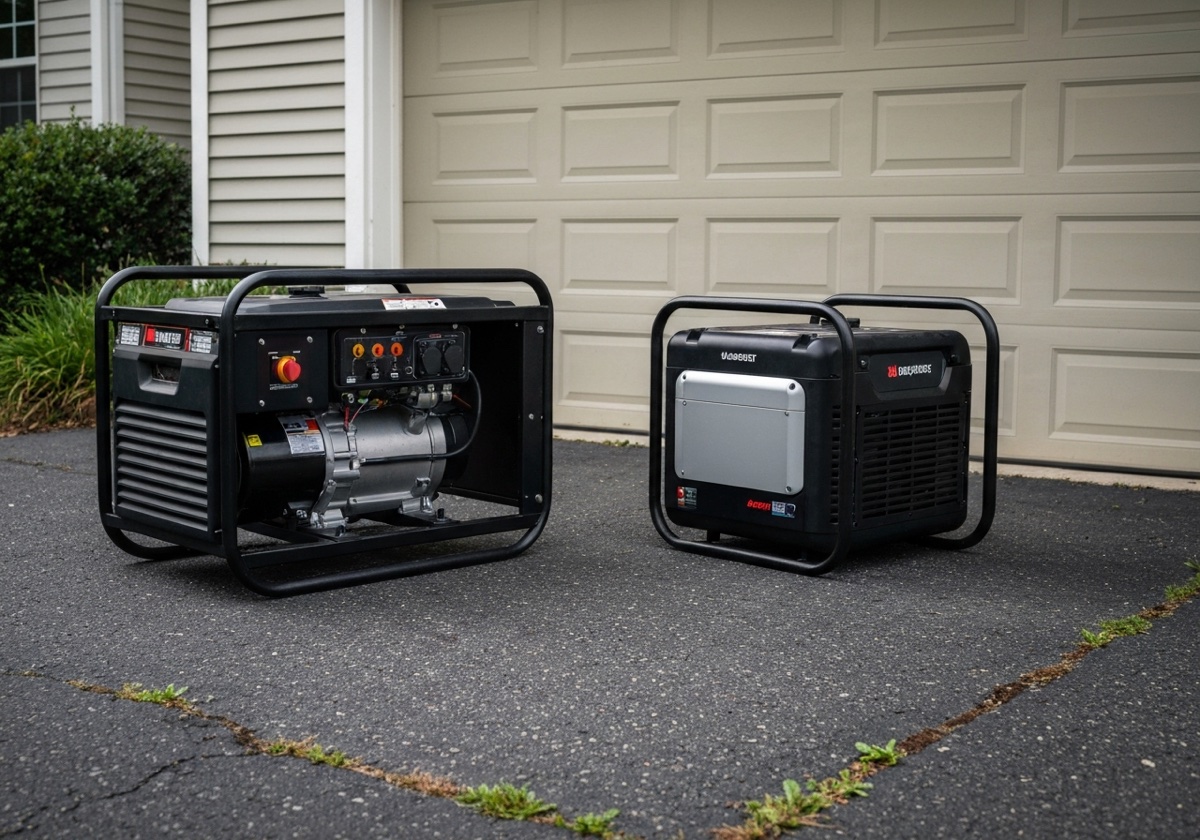
The average American home loses power for around eight hours a year, and in storm-prone states that number climbs into the days. When the grid goes down, a portable generator is still the most affordable way to keep the refrigerator cold, the sump pump running, and the lights on without spending five figures on a standby system.
The problem is that the market is crowded with hundreds of models, spec sheets that lead with inflated “peak” numbers, and reviews that never explain what actually matters for home backup: running watts, fuel flexibility, noise, and how you plan to connect the thing to your house.
This guide cuts through that. Based on manufacturer specifications, owner feedback, and long-term reliability reputations, here are the portable generators that make the most sense for home power outages in 2026, plus the sizing math and connection options you need to get it right the first time.
Quick Answer: Our Top Picks at a Glance
- Best overall for whole-home backup: Westinghouse WGen9500DF. Around 9,500 running watts on gasoline, dual-fuel, remote start, and a 240V outlet for a transfer switch or interlock. The most home-backup capability per dollar.
- Best inverter generator: Honda EU2200i. Roughly 1,800 running watts of famously reliable, quiet, clean power. The gold standard for essentials and sensitive electronics.
- Best budget pick: WEN 56235i. Around 1,900 running watts of inverter power for a fraction of the Honda’s price. Ideal for first-time buyers covering a fridge and small loads.
- Best big-home inverter: DuroMax XP9000iH. Roughly 7,600 running watts of clean inverter power on gas or propane, enough for most circuits in a large home, including many central AC units with soft starters.
- Best mid-size value: Champion 4500-Watt Dual Fuel Inverter. Around 3,500 running watts, quiet, and fuel-flexible. The sweet spot for essentials plus a window AC or space heater.
- Best light-duty conventional alternative: Generac GP3300i. Roughly 2,500 running watts from a trusted brand with a wide dealer network.
How Big a Generator Do You Actually Need?
Sizing is where most buyers go wrong, usually by overbuying. Add up the running watts of everything you would power at the same time, then check the largest motor-driven appliance on the list, because motors briefly draw two to three times their running wattage at startup.
Typical home loads look like this:
- Refrigerator: 100-200 running watts, 800-1,200 starting watts
- Sump pump (1/2 HP): around 1,000 running watts, 2,000-3,000 starting
- Gas furnace blower: 400-800 running watts
- Window AC: 500-1,500 running watts
- Well pump (1 HP): around 2,000 running, up to 4,000 starting
- Lights, phones, Wi-Fi, TV: 200-400 watts combined
- Central AC (3 ton): 3,000-3,500 running watts, far more at startup without a soft starter
That produces two practical tiers for home backup:
- Essentials only (fridge, freezer, furnace blower, lights, electronics): 3,000-4,000 running watts is plenty, with headroom for startup surges.
- Most of the house (add well pump, water heater on a timer, a window AC or two, maybe central air with a soft starter): 7,500-9,500 running watts, connected through a transfer switch or interlock.
If you are between sizes, remember that a generator loafing at 30 percent load burns dramatically less fuel than one working at 90 percent, but an oversized conventional unit wastes fuel at low loads. Inverter models throttle down automatically, which is one of several reasons they dominate the recommendations below.
Inverter vs Conventional: Which Belongs at Your House?
A conventional generator runs its engine at a constant 3,600 RPM whether you are drawing 200 watts or 8,000, producing raw power with relatively high total harmonic distortion. An inverter generator converts engine output to DC and back to clean AC, and throttles the engine up and down to match the load.
For home use, inverter models win on almost every count that matters:
- Clean power: Under 3 percent distortion is safe for laptops, modern furnaces with control boards, CPAP machines, and TVs. Conventional units can exceed 10 percent.
- Noise: Inverters typically run in the 52-64 dB range at quarter load; conventional units sit around 70-78 dB. In a neighborhood at 2 a.m., that difference is enormous.
- Fuel economy: Variable engine speed can cut overnight fuel use by a third or more at light loads.
The conventional generator’s remaining advantage is price per watt at the high end. A 9,500-watt conventional dual-fuel unit costs roughly what a 4,500-watt inverter does. If your outage plan involves powering most of the house for days, that math still favors a big conventional unit like the Westinghouse below. For everything else, buy an inverter.
The Best Portable Generators for Home Backup in 2026
Westinghouse WGen9500DF: Best Overall for Whole-Home Backup
Check the current price of the Westinghouse WGen9500DF on Amazon.
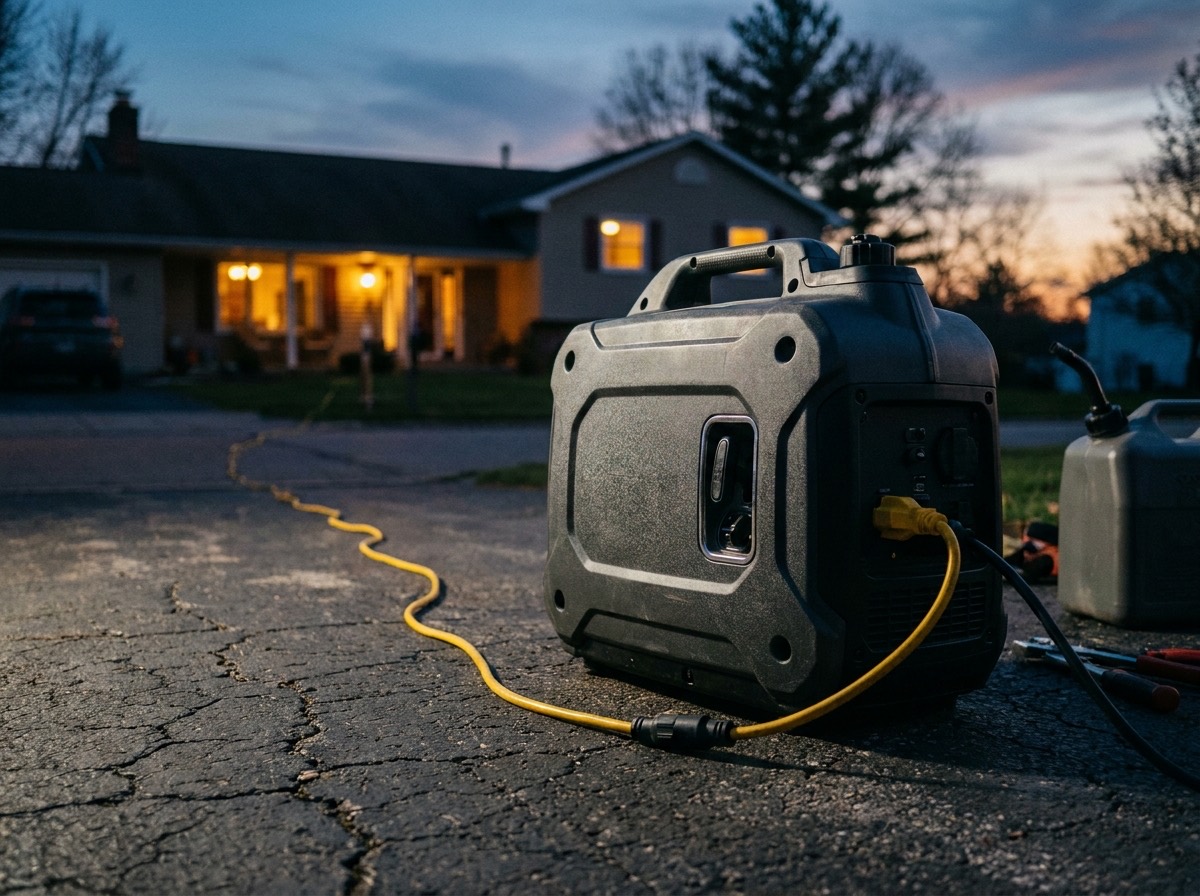
Who it’s for: Homeowners who want to back up most of the house, including 240V circuits like a well pump or water heater, without paying inverter prices.
- Roughly 9,500 running watts / 12,500 peak on gasoline; around 8,500 running on propane
- Dual fuel (gasoline or propane) with electric and remote start
- 30A and 50A 240V outlets, transfer-switch ready
- Around 12 hours of runtime on a full 6.6-gallon tank at half load
- Roughly 74 dB, and heavy at over 200 pounds (wheel kit included)
Strengths: Unmatched power per dollar, propane option for long-term fuel storage, and enough capacity to run central air in many homes if you add a soft starter. Trade-offs: It is loud, thirsty at high loads, and its conventional power is not ideal for sensitive electronics unless they sit behind a UPS or quality surge protection.
Honda EU2200i: Best Inverter Generator
Check the current price of the Honda EU2200i on Amazon.
Who it’s for: Anyone who wants the most reliable small generator ever mass-produced and only needs to cover essentials.
- Roughly 1,800 running watts / 2,200 peak
- Around 48-57 dB depending on load, quiet enough for a conversation beside it
- Roughly 47 pounds, genuinely one-hand portable
- Up to about 8 hours on 0.95 gallons in Eco mode
- Parallel-capable: two units linked give roughly 3,600 running watts
Strengths: Legendary Honda GXR120 engine reliability, effortless starting after months of storage, and resale value that holds better than any competitor. Trade-offs: It costs two to three times what similarly sized competitors do, has no fuel gauge or electric start, and 1,800 watts will not run a well pump or any 240V load.
Champion 4500-Watt Dual Fuel Inverter: Best Mid-Size Value
Check the current price of the Champion 4500W inverter on Amazon.
Who it’s for: The homeowner who wants clean, quiet power for essentials plus one big extra (window AC, space heater, or power tools) with fuel flexibility.
- Roughly 3,500 running watts / 4,500 starting on gasoline; slightly less on propane
- Around 61 dB at quarter load
- Electric start with a wireless remote on the popular trim
- Up to about 14 hours on a full tank of gasoline at 25 percent load
- Wheels and a folding handle; around 100 pounds
Strengths: Dual fuel in an inverter at this price is rare, Champion’s support network is strong, and the RV-ready 30A outlet doubles for interlock setups on 120V-only homes. Trade-offs: No 240V output, so it cannot feed a standard 240V transfer switch, and it is too heavy to lift alone.
DuroMax XP9000iH: Best Big-Home Inverter Power
Check the current price of the DuroMax XP9000iH on Amazon.
Who it’s for: Homeowners who want near-whole-home wattage but refuse to give up clean inverter power and lower noise.
- Roughly 7,600 running watts / 9,000 peak, dual fuel
- Inverter output safe for electronics throughout the house
- 50A 240V outlet, ready for a transfer switch or interlock
- Around 69 dB, notably quieter than conventional units of this size
- Electric start; heavy at roughly 250 pounds but wheeled
Strengths: It is one of the few machines that combines 240V whole-home capability, dual fuel, and inverter-grade power quality. Runs most central AC systems when paired with a soft starter. Trade-offs: You pay a significant premium over a conventional unit with the same wattage, and DuroMax’s dealer network is thinner than Honda’s or Generac’s.
Generac GP3300i: Best Light-Duty Pick from a Big Brand
Check the current price of the Generac GP3300i on Amazon.
Who it’s for: Buyers who want a mainstream brand with wide parts availability for fridge-and-lights duty.
- Roughly 2,500 running watts / 3,300 starting
- Inverter power with USB ports and Economy mode
- Around 59 pounds with integrated handles
- Roughly 4.5-7 hours of runtime depending on load
Strengths: More starting watts than most 2,200-class units, which helps a refrigerator and sump pump start together, and Generac service centers are everywhere. Trade-offs: Runtime per tank trails the Honda, it is gasoline-only, and the brand’s small inverters do not have the Honda’s long-haul reputation yet.
WEN 56235i: Best Budget Pick
Check the current price of WEN inverter generators on Amazon.
Who it’s for: First-time buyers who want a real inverter generator for emergencies a few times a year without a big outlay.
- Roughly 1,900 running watts / 2,350 peak
- Around 51 dB at quarter load, among the quietest in class
- Roughly 39 pounds, the lightest unit on this list
- Fuel shutoff feature that drains the carburetor before storage, a genuinely useful touch for occasional use
Strengths: Excellent noise numbers, clean power, and a price that often lands under half of the Honda’s. Trade-offs: Expect a shorter service life under heavy use, a smaller dealer network, and no dual-fuel option. For a generator that runs ten hours a year, those compromises are easy to accept.
How Will You Connect It to Your House?
A generator you cannot connect safely is just a loud lawn ornament. You have three realistic options:
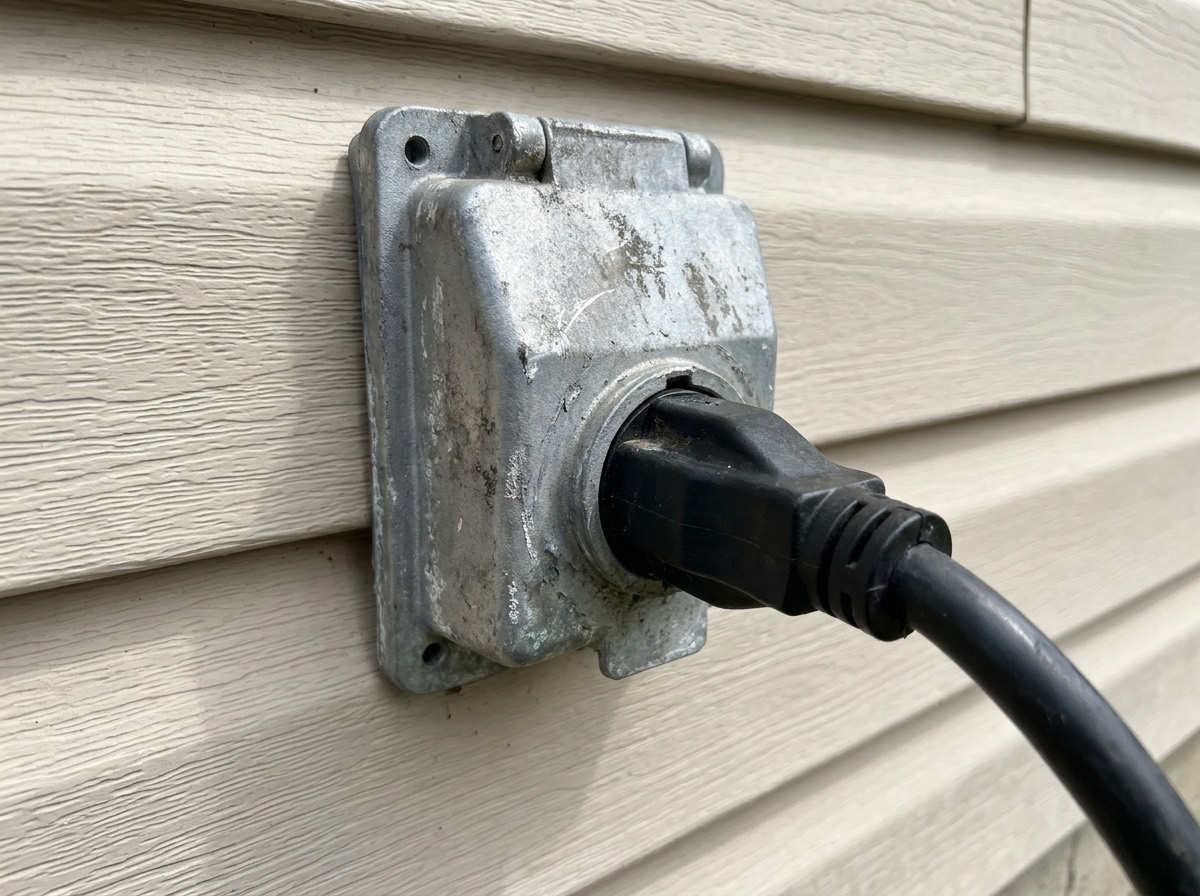
- Extension cords: Free and simple. Run heavy-gauge outdoor cords (12-gauge or thicker) from the generator to individual appliances. Fine for a fridge and lamps, useless for hardwired loads like a furnace or well pump.
- Interlock kit: A metal plate on your breaker panel that lets you backfeed the panel through a dedicated inlet, but only after the main breaker is off. Roughly $150 in parts plus a few hundred dollars of electrician labor. Powers any circuit in the house up to the generator’s capacity.
- Manual transfer switch: A separate small panel feeding 6-10 chosen circuits. Roughly $400-$1,000 installed. The cleanest, most idiot-proof option.
Both the interlock and transfer switch require a licensed electrician and, in most jurisdictions, a permit. Never plug a generator into a wall outlet with a homemade double-male cord. That practice, called backfeeding, can electrocute utility line workers and is illegal everywhere in the United States.
Fuel Strategy: The Part Everyone Skips
Gasoline goes stale in roughly 3-6 months even with stabilizer, and it is the first thing to vanish from stations during a regional outage. That is why dual-fuel models earn their premium: propane stores indefinitely, and two 20-pound grill tanks hold enough energy to run a mid-size generator at half load for around 10-14 hours.
A sensible baseline: keep 10-15 gallons of stabilized gasoline rotated into your car every few months, plus two or three full propane tanks. For a 9,500-watt unit running most of a house, budget roughly 12-18 gallons of gasoline per day at moderate load, which is exactly why load management (running the generator a few hours at a time) matters during long outages.
Noise: Staying Friends with the Neighbors
Sound matters more than most buyers expect. A 70 dB conventional generator is roughly as loud as a vacuum cleaner running in the yard all night, and many municipalities enforce nighttime noise ordinances around 55-60 dB at the property line. Inverter models in the 50s are barely noticeable over ambient suburban noise. Placement helps too: position the unit with its exhaust facing away from both your house and your neighbor’s, and distance alone drops perceived noise fast (every doubling of distance cuts sound by about 6 dB).
How to Choose: A 60-Second Decision Path
- Outages are rare and short, budget is tight: WEN 56235i plus good extension cords.
- You want essentials covered with zero drama for a decade: Honda EU2200i.
- Essentials plus heating or cooling, and fuel flexibility: Champion 4500 dual-fuel inverter.
- Whole-home coverage on a budget, multi-day storm risk: Westinghouse WGen9500DF with an interlock or transfer switch.
- Whole-home coverage, but noise and electronics matter: DuroMax XP9000iH.
- Brand support and light duty: Generac GP3300i.
Frequently Asked Questions
What size generator do I need to run a whole house?
Most homes can run everything that matters on 7,500-9,500 running watts with basic load management (not running the dryer, oven, and AC simultaneously). True everything-at-once coverage for a large home usually requires a standby generator in the 18-24kW range, which is a different product category.
Can a portable generator run my central air conditioning?
Often, yes. A 3-ton unit needs roughly 3,000-3,500 running watts but can demand two to three times that at startup. A 9,500-watt generator handles it comfortably; adding a soft-start kit to the AC (roughly $300-$500 installed) lets even 7,500-watt units start it reliably.
How long can a portable generator run continuously?
Most manufacturers recommend shutting down to check oil and refuel every 8-12 hours, and refueling must always happen with the engine off and cooled for several minutes. During multi-day outages, running the generator in blocks (morning and evening) stretches fuel and engine life dramatically.
Are dual-fuel generators worth it?
For home backup, usually yes. You give up roughly 10 percent of output on propane, but you gain a fuel that never goes stale and is often still available when gas stations are dark. The price premium is typically modest.
Safety first: portable generators produce carbon monoxide, an invisible, odorless gas that kills people every year. Always run a generator outdoors, at least 20 feet from the house, with the exhaust pointed away from doors, windows, and vents. Never run one in a garage, even with the door open. Install battery-powered CO detectors on every level of your home, and have all panel connections performed by a licensed electrician. This article is for general information only.