
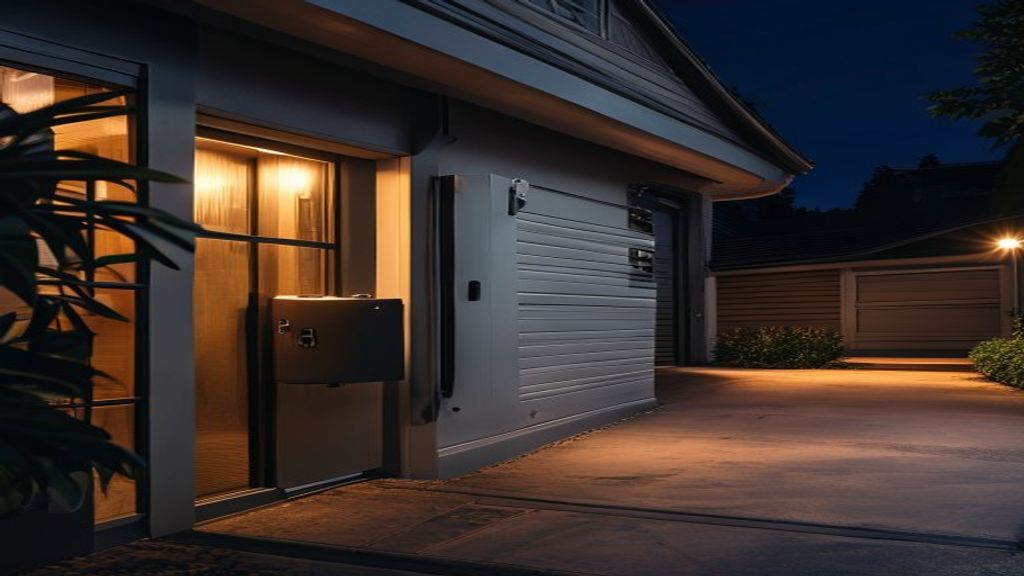
Somewhere along the way, home batteries and solar panels got welded together in the public imagination. Installers quote them as a package, neighbors assume you have panels if you have a battery, and half the articles online treat “battery” as a solar accessory. So when a homeowner without solar starts pricing backup power, the first question is almost always the same: does a home battery even work without panels on the roof?
It does. A home battery charges from the grid exactly the way your phone does, just at a much larger scale. The real question is not whether it works, but whether it is worth $10,000 to $16,000 of your money when there is no solar in the picture. For some households the answer is clearly yes. For others, the same money is better spent elsewhere. This guide walks through both cases honestly.
Quick Answer: Is a Battery Worth It Without Solar?
- Yes, it works without solar. The battery charges from the grid and takes over automatically during an outage, usually so fast you never notice the switch.
- Three ways it earns its keep: outage backup, buying cheap overnight electricity to use during expensive peak hours (time-of-use arbitrage), and payments from virtual power plant (VPP) programs.
- Strongest case: you have time-of-use rates with a spread above roughly $0.20 per kWh, or frequent outages, or an HOA that bans generators, or medical equipment that cannot lose power.
- Weakest case: flat electric rates, rare outages, and no VPP programs in your area. In that scenario the battery is pure insurance, and expensive insurance at that.
- The 30% federal tax credit applies to standalone batteries, no solar required, which takes a $14,000 install down to roughly $9,800.
How a Battery Works With No Panels on the Roof
A grid-charged battery system is simple. The battery sits on your wall or in the garage, connected to your electrical panel through a backup switch. Day to day, it charges from the grid on whatever schedule you set. When the grid goes down, the switch isolates your home and the battery starts carrying your circuits, typically in a fraction of a second. When power returns, it recharges and goes back to waiting.
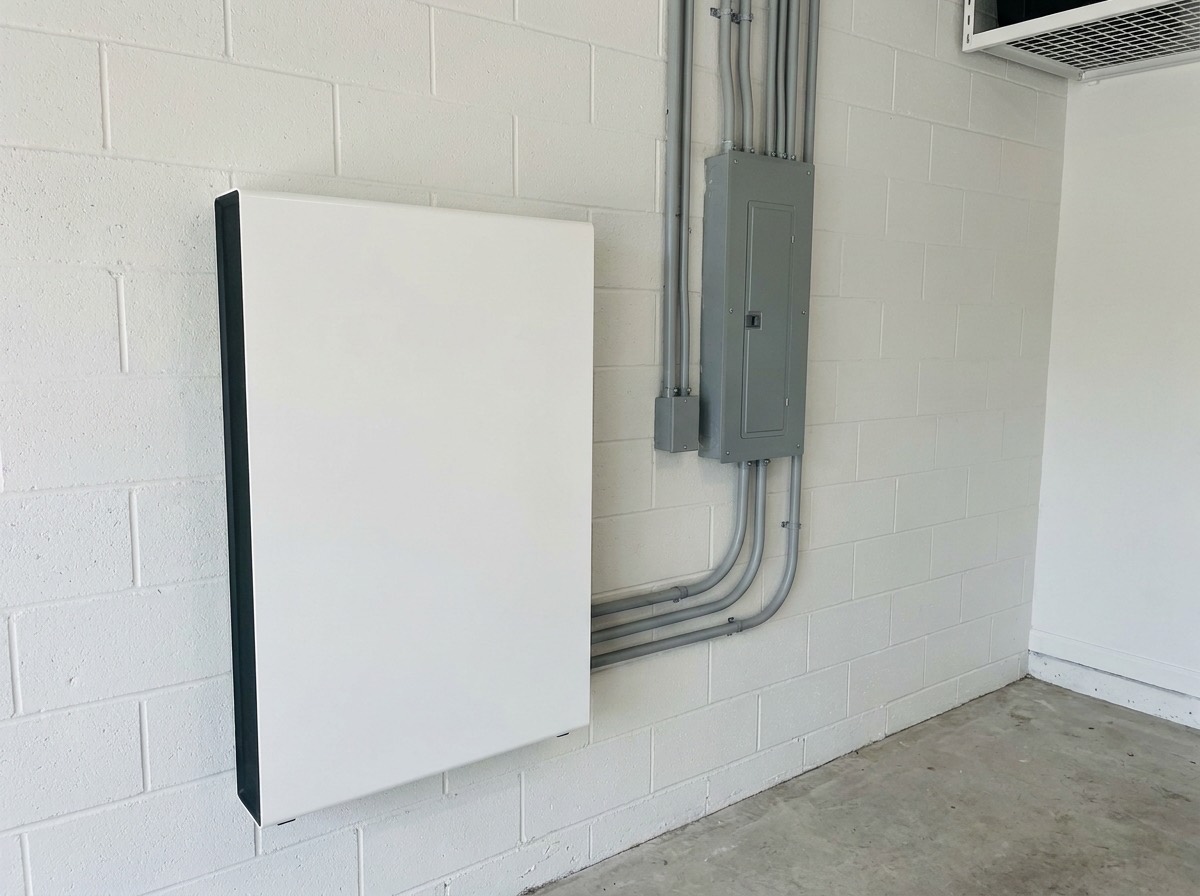
Nothing about that sequence requires solar. What solar adds is the ability to refill the battery during an extended outage. Without panels, your battery is one tank of energy: when it is empty, you wait for the grid like everyone else. That distinction shapes everything below.
The Three Value Streams of a Solar-Free Battery
1. Outage backup
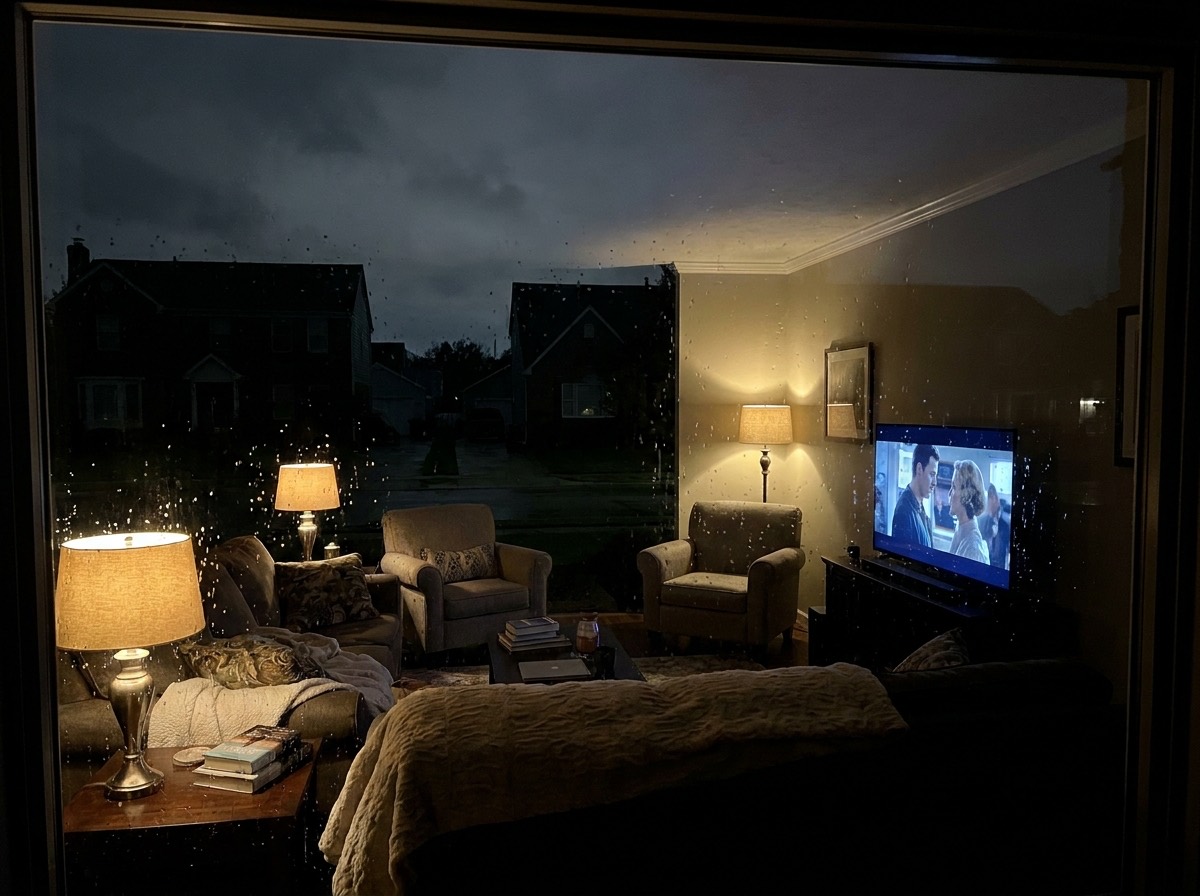
This is why most people call an installer in the first place. A 13.5kWh battery holds enough energy to run the essentials (refrigerator, lights, internet, furnace fan, phones, a TV) for roughly one to two days, drawing 300 to 600 watts on average. Run the whole house, air conditioning included, and the same battery may last only 3 to 6 hours. The backup value is real but bounded: excellent for the 2 to 24 hour outages that make up the vast majority of US interruptions, thin for the week-long disaster scenario.
2. Time-of-use arbitrage
This is the value stream that turns a battery from insurance into an investment. If your utility charges time-of-use (TOU) rates, electricity might cost roughly $0.25 per kWh overnight and $0.55 per kWh from 4 p.m. to 9 p.m. A battery charges during the cheap window and powers your home during the expensive one, every single day, automatically. You buy low and use high, and the savings compound quietly in the background. The bigger the gap between off-peak and peak prices, the faster the battery pays for itself.
3. Virtual power plant income
Utilities and aggregators in a growing number of states pay battery owners for the right to draw on their stored energy during grid emergencies: hot summer evenings, cold snaps, generation shortfalls. Programs vary widely, from roughly $100 to $1,000 per year, sometimes with upfront enrollment bonuses of $1,000 or more. You set a reserve floor so your own backup needs come first, and events typically total a handful of hours per year. Texas and California have the most active programs, but utility offerings now stretch across New England, the mid-Atlantic, and beyond.
When a Battery Without Solar Makes Sense
- Your TOU spread is wide. If peak and off-peak rates differ by more than roughly $0.20 per kWh, daily arbitrage generates meaningful money. Spreads of $0.30 or more, common in California, make the math genuinely attractive.
- Your outages are frequent or long. If you lose power several times a year, live at the end of a rural feeder, or face wildfire-prevention shutoffs, the backup value alone starts justifying the price.
- You cannot use a generator. HOA noise rules, no outdoor space, attached housing, or a personal veto on storing gasoline all point toward a battery, which is silent, fumeless, and legal everywhere.
- Someone in the house depends on power. CPAP machines, oxygen concentrators, refrigerated medication, or a home office where an outage means lost income change the calculation from convenience to necessity, and a battery switches over fast enough that sensitive equipment never notices.
- A strong VPP program operates in your area. Steady annual payments stack on top of arbitrage savings and can shave years off the payback period.
When It Does Not Make Sense
- You pay a flat rate for electricity. With no price gap between midnight and 6 p.m., there is nothing to arbitrage. The battery becomes pure backup insurance, roughly $10,000 for protection you may use a few hours a year.
- Your outages are rare and short. If your utility interrupts you for two hours every couple of years, a $300 portable power station for the Wi-Fi and phones covers most of the real-world pain at 3% of the cost. Our guide to home backup power for every budget walks through those lower-cost options.
- You could go solar-plus-battery instead. If your roof is suitable and your budget can stretch, the bundle usually beats the standalone battery on every metric: shared installation costs, daily solar self-consumption savings, and the ability to recharge indefinitely during long outages. A battery-only purchase makes the most sense when solar is off the table (shaded roof, rental restrictions, historic district rules) or firmly postponed.
Runtime Reality: What 13.5kWh Actually Buys You
Marketing pages love the phrase “whole-home backup.” The physics are less generous. A 13.5kWh battery delivering its full capacity provides:
- Essentials only (roughly 400W average): around 30 or more hours, comfortably one to two days.
- Essentials plus a window AC or space heater (roughly 1,200W average): around 10 to 11 hours.
- Typical whole-home usage (roughly 2,000 to 3,000W average): around 4 to 7 hours.
- Central air conditioning running: the battery drains in roughly 2 to 4 hours, if it can start the compressor at all.
Without solar to refill it, discipline is the whole game during a long outage. Households that shed loads aggressively (fridge, lights, internet, nothing else) routinely stretch a single battery across two days. Households that try to live normally drain it before bedtime the first night. If you want more headroom, our picks for the best whole house battery backup systems cover larger and stackable options.
The Tax Credit Still Applies
Since 2023, the federal Residential Clean Energy Credit covers 30% of the installed cost of standalone battery storage of 3kWh or more, labor and permits included, with no solar requirement at all. A $14,000 battery installation generates a $4,200 credit against your federal taxes, for a net cost of roughly $9,800. The credit is nonrefundable but carries forward if you cannot use it all in one year. Some states and utilities add their own battery rebates on top. As always with tax matters, confirm your eligibility with a professional before counting the money.
Worked Example: The Annual Math for a TOU Household
Consider a homeowner in California on a time-of-use plan, or a Texan on a free-nights style plan; the structure is the same. Assume off-peak power at roughly $0.28 per kWh, peak power at roughly $0.55 per kWh, and a 13.5kWh battery that cycles 10kWh of that capacity through the peak window on a typical day.
Daily arbitrage savings:
- 10kWh shifted × ($0.55 – $0.28) = $2.70 saved per day on paper.
- Batteries are not perfectly efficient. At roughly 90% round-trip efficiency, you buy about 11.1kWh to deliver 10, costing an extra $0.31. Realistic daily savings: roughly $2.40.
- Over 365 days, with occasional maintenance days and mild-weather days when less shifting happens, call it 330 effective days: roughly $790 per year.
Add VPP income: a mid-range program paying roughly $400 per year brings the total to roughly $1,190 per year.
Payback math: against a net cost of $9,800 after the federal credit, $1,190 per year is a simple payback of roughly 8 years, inside a 10-year warranty, with every outage the battery covers added on top as unpriced value. Now rerun the numbers with a flat rate: arbitrage drops to zero, VPP maybe pays $400, and payback stretches past 24 years. Same battery, same house, completely different verdict. The rate plan is the whole story.
Decision Checklist: Should You Buy a Battery Without Solar?
- Pull up your actual rate plan. Is the peak versus off-peak spread more than roughly $0.20 per kWh? If yes, the investment case is alive. If you are on a flat rate, ask your utility whether a TOU plan is available; switching plans is often step one.
- Count your outages. More than two or three per year, or any outage over 12 hours in recent memory, strengthens the case.
- Search for VPP programs from your utility or your battery brand in your state, and note the annual payment.
- Check the generator alternative. If a generator is allowed, practical, and acceptable to you, it delivers longer runtimes for less money. If it is banned or unworkable, the battery is your lane.
- Check for medical or work-from-home dependencies that make even short outages costly.
- Get the net price. Quote the system, subtract 30% for the federal credit, subtract any state or utility rebate, and weigh that number against the annual value you calculated above.
Roughly speaking: two or more strong “yes” answers and a wide TOU spread make a solar-free battery a sound purchase. One lukewarm “yes” means a portable power station probably serves you better for now.
Planning for Solar Later: The Battery-Ready Middle Path
Many homeowners want backup now and suspect solar is in their future. Good news: buying the battery first does not burn the bridge, if you plan for it.
- Choose a battery that accepts solar input, either through a hybrid inverter or an AC-coupled architecture that pairs with any future solar inverter. Most major systems sold today can do this; confirm it in writing. Our comparison of Tesla Powerwall alternatives notes which systems handle future solar gracefully.
- Have the installer size conduit and wall space for future panels and a possible second battery. This costs almost nothing during the first install and saves real money later.
- Know the trade-off: installing battery and solar separately typically costs roughly $2,000 to $4,000 more in total than bundling them, because permitting and crew time happen twice. If solar is realistically less than two years away, quoting the combined project now usually wins.
- Tax credit note: the battery claims its 30% credit when installed, and future solar claims its own credit on its own cost. Staging does not forfeit anything.
The homeowners who regret battery-first purchases are almost always the ones who bought a closed system that could not take solar input later. Avoid that one mistake and staging works fine.
Frequently Asked Questions
Can a home battery really charge from the grid alone?
Yes. Every major home battery system can charge entirely from grid power on a schedule you control. Solar is optional. The only practical difference shows up in long outages, when a grid-only battery cannot recharge until utility power returns.
How long will a 13.5kWh battery run my house in a blackout?
Running essentials only (refrigerator, lights, internet, phones, furnace fan), expect roughly one to two days. Running a typical home without load discipline, expect roughly 4 to 7 hours. Central air conditioning can drain the battery in 2 to 4 hours, so most owners leave it off during outages.
Do I get the 30% federal tax credit if I have no solar panels?
Yes. Since 2023, standalone home batteries of 3kWh or more qualify for the 30% Residential Clean Energy Credit, including installation labor, with no solar requirement. The credit offsets federal tax liability and can carry forward to later years. Confirm your specific eligibility with a tax professional.
Is a battery or a generator better if I do not have solar?
For long, multi-day outages and pure runtime per dollar, a standby or portable generator still wins. For everything else (silent operation, indoor-adjacent safety, instant switchover, zero maintenance, daily bill savings on TOU rates, and VPP income), the battery wins. Households with wide TOU spreads often find the battery is the only option that actually pays part of its own bill.
Electric rates, incentive programs, and VPP payments vary widely by state and utility and change often. Use the figures here as planning estimates, run the math with your own rate plan, and confirm tax credit details with a qualified professional.