
This post contains affiliate links. If you buy through them, we may earn a commission at no extra cost to you.
When someone in your home depends on a CPAP machine, oxygen concentrator, or refrigerated insulin, a power outage is not an inconvenience. It is a medical emergency waiting to happen. Yet most emergency preparedness guides treat backup power for medical devices as an afterthought.
This guide covers exactly how much power common medical devices need, which backup options actually work for each device, and how to build a reliable plan whether your budget is $150 or $15,000.
Quick Answer: The Best Backup Power by Medical Device
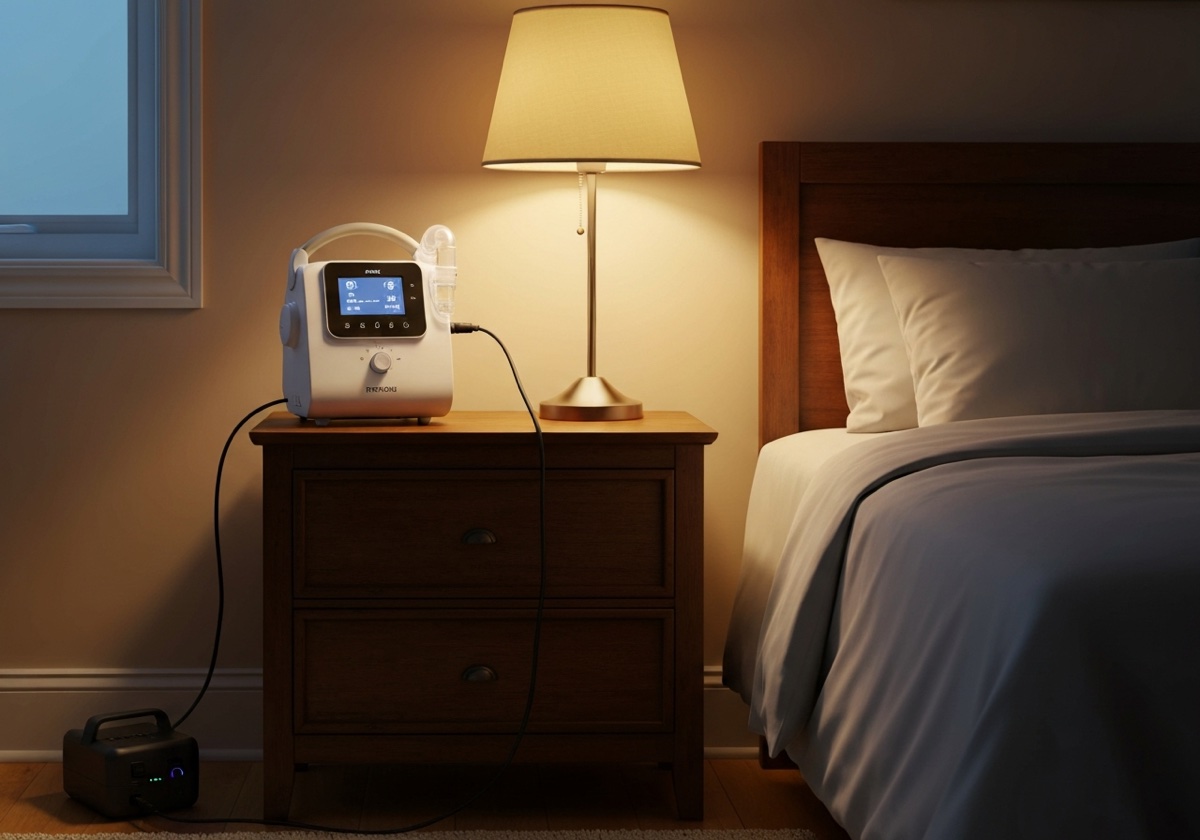
- CPAP/BiPAP machines: A mid-size portable power station (300–500Wh) covers 1–3 nights. Best balance of price, safety, and runtime.
- Oxygen concentrators: A large portable power station (1,000Wh or more) or a dual-fuel generator. Concentrators draw far more power than most people expect.
- Refrigerated medication (insulin, biologics): A small power station plus a dedicated cooler. Your fridge only needs power a few minutes per hour to hold temperature.
- Home dialysis or ventilators: A whole-house standby generator or home battery system, with a portable power station as a bridge. These are life-critical loads that justify permanent solutions.
Why Medical Devices Change the Backup Power Equation
Backup power for a TV or Wi-Fi router is about comfort. Backup power for medical equipment is about safety, and that changes three things.
First, reliability beats capacity. A generator that fails to start after six months in the garage is worthless at 2 a.m. Battery-based power stations win here: they turn on instantly, every time, with no fuel, no pull cord, and no maintenance.
Second, indoor operation matters. Fuel generators produce carbon monoxide and can never run indoors, in a garage, or near a window. A person tethered to an oxygen concentrator during an ice storm cannot stand outside next to a generator. Battery power stations run silently and safely in the bedroom.
Third, runtime math must be conservative. With medical devices, you plan for the outage that lasts three days, not three hours. Utilities restore power to most homes within 24 hours, but major storms routinely cause multi-day outages.
How Much Power Do Medical Devices Actually Use?
Manufacturers print worst-case wattage on labels, so real-world consumption is usually lower. These are typical operating ranges:
- CPAP (heated humidifier OFF): 30–60 watts
- CPAP (heated humidifier ON): 70–150 watts
- BiPAP: 40–100 watts
- Home oxygen concentrator (5L): 300–600 watts, running continuously
- Portable oxygen concentrator: 40–120 watts
- Nebulizer: 50–100 watts (used in short sessions)
- Compact medication fridge: 40–80 watts while cycling
- Home ventilator: 100–200 watts, running continuously
The single most important tip for CPAP users: turn off the heated humidifier and heated tubing during an outage. That one change can triple your battery runtime. A CPAP pulling 40 watts runs roughly 10 hours on a small 500Wh power station; with the humidifier on, the same battery may not finish one night.
Option 1: Portable Power Stations (Best for Most People)
A portable power station is a large lithium battery with regular AC outlets and USB ports. For CPAP users and refrigerated medication, it is the best first purchase: silent, safe indoors, zero maintenance, and ready the moment the lights go out.
What size do you need?
- 256–300Wh (roughly $200–$300): One night of CPAP without humidifier. Good as a bedside bridge, not a full solution.
- 500–800Wh (roughly $350–$600): Two to three nights of CPAP, or a full day of medication refrigeration. The sweet spot for most CPAP users.
- 1,000–2,000Wh (roughly $700–$1,500): Runs a 5L oxygen concentrator for 2–4 hours, or CPAP for a week. Add solar panels to recharge indefinitely during extended outages.
- 3,000Wh and up (roughly $2,000+): Overnight oxygen concentrator runtime. At this level, also compare against a home battery system.
Established brands in this category include EcoFlow, Jackery, Bluetti, Anker SOLIX, and Goal Zero. All use modern lithium batteries; models with LiFePO4 (lithium iron phosphate) chemistry last significantly longer, often 3,000+ charge cycles, and are worth prioritizing for medical use.
Check the current price of the EcoFlow River 2 Pro on Amazon.
The solar advantage
Most power stations accept solar panel input. A 200W folding panel can put 800–1,000Wh back into your battery on a sunny day, enough to run a CPAP for several more nights. For multi-day outages, a power station plus solar panel is the only silent, indoor-safe setup that never runs out.
See current pricing for a 200W portable solar panel on Amazon.
Option 2: UPS (Uninterruptible Power Supply)
A UPS is the small battery box used to keep computers running during blips. For medical devices, a UPS has one big advantage: zero-gap switching. If a ventilator or oxygen concentrator cannot tolerate even a one-second interruption, a UPS bridges the gap instantly while you bring your main backup online.
Check the current price of a UPS battery backup for medical devices on Amazon.
The weakness is capacity. Most consumer UPS units store only 100–300Wh, which means minutes of runtime for an oxygen concentrator, not hours. Use a UPS as the first link in the chain, not the whole chain.
Option 3: Portable Generators (Best Power per Dollar, With Caveats)
A $500–$900 dual-fuel inverter generator produces 3,000+ watts for as long as you feed it gasoline or propane. It will run an oxygen concentrator, the refrigerator, and half your house at the same time. For high-draw devices over multi-day outages, nothing beats the economics.
The caveats are serious for medical use:
- It must run outdoors, at least 20 feet from the house, never in a garage. Carbon monoxide from generators kills dozens of Americans every year.
- Someone must be able to start it, refuel it, and maintain it. If the medical device user lives alone, this is a real limitation.
- Choose an inverter generator. Conventional generators produce rough power that can damage sensitive medical electronics.
The strongest setup pairs a generator with a power station: the battery runs the bedroom silently all night, and the generator recharges it (and runs the fridge) for an hour or two each day.
Option 4: Whole-House Standby Generators and Home Batteries
For ventilators, home dialysis, or households with multiple medical loads, a permanent solution is justified. A standby generator (installed cost roughly $8,000–$15,000) starts automatically within seconds of an outage and runs on natural gas or propane for days. A home battery system such as a Tesla Powerwall or Enphase battery (installed cost roughly $10,000–$20,000) switches over in milliseconds, runs silently, and can recharge from solar.
If a life depends on the equipment, automatic switchover is the feature that matters most: it works even when nobody is home or awake.
Special Case: Keeping Insulin Cold Without Power
Insulin is more forgiving than most people think. Unopened insulin should stay at 36–46°F (2–8°C), but according to manufacturer guidance it remains usable at room temperature (up to about 77°F / 25°C) for roughly 28 days. In an outage your goals are simple:
- Keep the fridge closed. A modern refrigerator holds safe temperatures for 4+ hours unopened.
- Power the fridge intermittently. A 1,000Wh power station running the fridge 15 minutes per hour can hold temperature for more than a day.
- Have a backup cooler. An evaporative cooling case or a simple insulated cooler with cold packs (never place insulin directly on ice) buys days of safety for a few dollars.
A Sample Three-Layer Plan for a CPAP + Insulin Household
- Layer 1 (first minutes): 500Wh power station at the bedside runs the CPAP the moment power drops. Cost: roughly $400.
- Layer 2 (day one): The same power station cycles the refrigerator; a 200W solar panel recharges it. Added cost: roughly $200.
- Layer 3 (multi-day): Dual-fuel inverter generator runs two hours morning and evening to recharge everything and cool the fridge. Added cost: roughly $700.
Total: about $1,300 for a setup that keeps a CPAP running and insulin cold through a week-long outage.
Practical Tips Before the Next Outage
- Register with your utility. Most U.S. utilities maintain a medical baseline or life-support registry. Registered households get outage priority and advance notice of planned shutoffs.
- Test your setup quarterly. Run the CPAP off the battery for one full night every few months. You want surprises during a test, not a storm.
- Check your device’s DC option. Many CPAPs accept 12V DC power directly, which skips the inverter and stretches battery life 10–15% further.
- Keep batteries topped up. Lithium power stations hold charge for months, but make a habit of checking before storm season.
- Talk to your doctor about a contingency plan. For oxygen users, that may mean keeping backup oxygen cylinders that need no power at all.
Frequently Asked Questions
How long will a 500Wh power station run a CPAP?
With the humidifier off, a typical CPAP draws 30–50 watts, so a 500Wh station delivers roughly 8–13 hours, one to two full nights. With the heated humidifier on, expect 3–5 hours.
Can I run an oxygen concentrator on a portable power station?
Yes, but size it carefully. A 5L home concentrator drawing 400 watts needs a 2,000Wh station for about 4 hours of runtime. For overnight use, you need either a very large battery, solar recharging, or a generator.
Is a car inverter a safe backup for medical devices?
As a last resort, yes: a 300W inverter plugged into a running car can power a CPAP. Never do this in a closed garage, and treat it as an emergency bridge, not a plan.
Does insurance or Medicare cover backup power for medical equipment?
Generally no. Medicare treats backup power as a convenience, not durable medical equipment. Some state assistance programs and utility medical-needs programs offer discounts or grants, so check locally.
This article is for general information only and is not medical advice. Always follow your device manufacturer’s guidance and consult your healthcare provider when building an emergency plan for life-sustaining equipment.